economics
-
On free-market economics & the actual meaning of words.
Despite being rather politically liberal, I consider myself a free market economist. (Maybe it’s unfair to self-describe as an economist, though? I did the coursework for a master’s degree in economics… but couldn’t get a degree because I didn’t complete the residency requirement. I was enrolled as an undergraduate at the time, and apparently would’ve…
basic research, beekeeping, CAFOs, cap and trade versus carbon tax, capital gains tax, carbon tax, Collapse, definition of fortuitous, definition of peruse, do taxes make people work less, Easter Island, economics, education spending, fortuitous, free market, free market distortions, free market economist, free-market fundamentalist, government subsidies, health spending, infrastructure, infrastructure spending, James Surowiecki, Jared Diamond, Joseph Stiglitz, market solutions, market solutions versus government solutions, mis-used words, misused words, New York Review of Books, patent protections, peruse, politicians misusing words, politics, pollution, positive externalities, pro-life, progressive taxation, right-wing economist, Stiglitz, subsidies, tax on high earners, taxation, taxing negative externalities, Thomas Friedman, tragedy of the commons, why does Easter Island have no trees, Why I Am Pro-Life, Why the Rich Are So Much Richer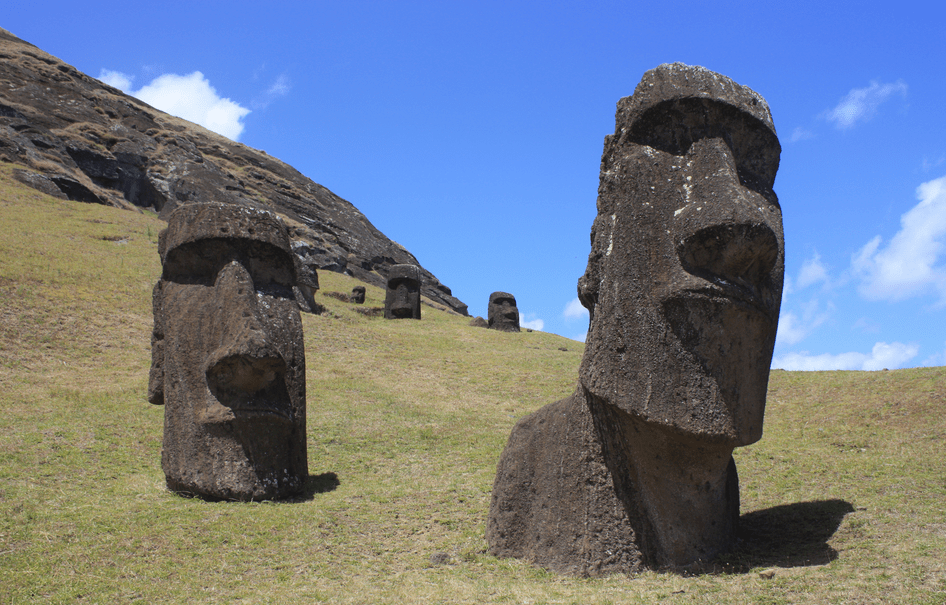
-
On the creepy parallel between gene duplication and oppression – as inspired by a passage from Karen Armstrong’s “Fields of Blood.”
“If, as has been shown for ethnographically documented hunter-gatherers, women in the most meat-dependent foraging societies spend less time procuring food and more time engaged in the production of technology and performing nonsubsistence tasks, then Clovis women likely spent the majority of their time not gathering plants. In this sense, equating women solely with plant…
-
On chimpanzees and Nash equilibria.
This is a pretty cool study, I think. Amongst other things, the authors compared the performance of pairs of chimpanzees in a zero-sum game to the performance of human pairs. And they noticed that pairs of chimpanzees typically perform much closer to the Nash equilibria than do human pairs. I do wish the authors had…
 Frank Brown Cloud