-
On human uniqueness and invasive species.
On evolutionary timescales, we are a slow-moving meaty wrecking ball. And our spread, apparently, resembles that of any other invasive species.
Adolph Lyons, animal cognition, animal teaching, Black Lives Matter, brain size, cooked food, excessive force, Homo erectus, Homo sapiens, homogenizing brains, human evolution, human extinctions, human migration, human migratory patterns, invasive species, Lyons v. Los Angeles, McCleskey v. Kemp, Neanderthal, neural circuitry, number of neurons in human brain, origin of knowledge, overcrowding, overpopulation, police chokeholds, quintet of hate machines, r-type population growth, racial injustice, sexual dimorphism, Stanford Graduate School of Education, starfish evolution, starvation, supreme court nomination, Suzana Herculano-Houzel, the plow brings misogyny, Trump supreme court appointment, u.s. supreme court
-
On fish (and their similarities to us).
We so often denigrate the capacities of presumed others. It’s much harder to exploit those whom you know feel.
animal cognition, animal learning, animal models of human psychiatric disorders, Are We Smart Enough to Know How Smart Animals Are, brain science, Descartes was wrong, differences between life in water and on land, dogs, fish, fish feel pain, Frans de Waal, Jonathan Balcombe, leopard gecko, mistreatment of animals, neural plasticity, Project Prakash, racism, Sean Carroll, The Big Picture, the evolution of intelligence, the suffering of others, What a Fish Knows
-
On throwing sand.
Even when we can’t change the world, we control how we perceive it. Which gives us the strength to press for change.

-
On a guaranteed basic income.
No one among us created the world.
computers, consciousness, correspondence collaboration, creditworthiness, criticizing social studies of finance with Lazzarato, Digital subjectivation and financial markets, exhaustion, free will, guaranteed basic income, gut bugs, hireability, human augmentation, implicit violence, intestinal fauna, market design, microbiome, narrative explanation, neurological consequences of tools, neurology, no cloning theorem, philosophy, physics, prostitutes, quantum mechanics, sex work, stock market, testosterone, the human drive for storytelling, the perception of freedom might well be good enough, Tim Christiaens, tool use, toxoplasma, uncertainty principle, wealth tax, welfare, working parents
-
On Poetry: Reginald Dwayne Betts’s “Bastards of the Reagan Era.”
Betts’s stark poetry documents our nation failing to offer sincere “correction” at its correctional facilities.

-
On Charles Foster’s ‘Being a Beast’ and battling the empathy gap.
If Charles Foster can learn, & care, what it’s like to be a badger, all citizens should be able to empathize with the experience of Homo sapiens from other ethnic backgrounds.
agricultural revolution, all lives matter, Being a Beast, Black Lives Matter, brains, Charles Foster, civil forfieture, common ancestors, Donald Trump, empathy, empathy gap, evolution, family first, faulty roadside drug tests, Hungary, incarceration crisis, injustice, Jeneen Interlandi, jeremy betham, John Oliver, living as a badger, natural selection, Neil Gaiman, neurological basis of empathy, Peter Singer, power racing, psychology, reading fiction develops empathy, river otters, Roma, swift, The View from the Cheap Seats, tofu, utilitarianism, vegan, vegetarian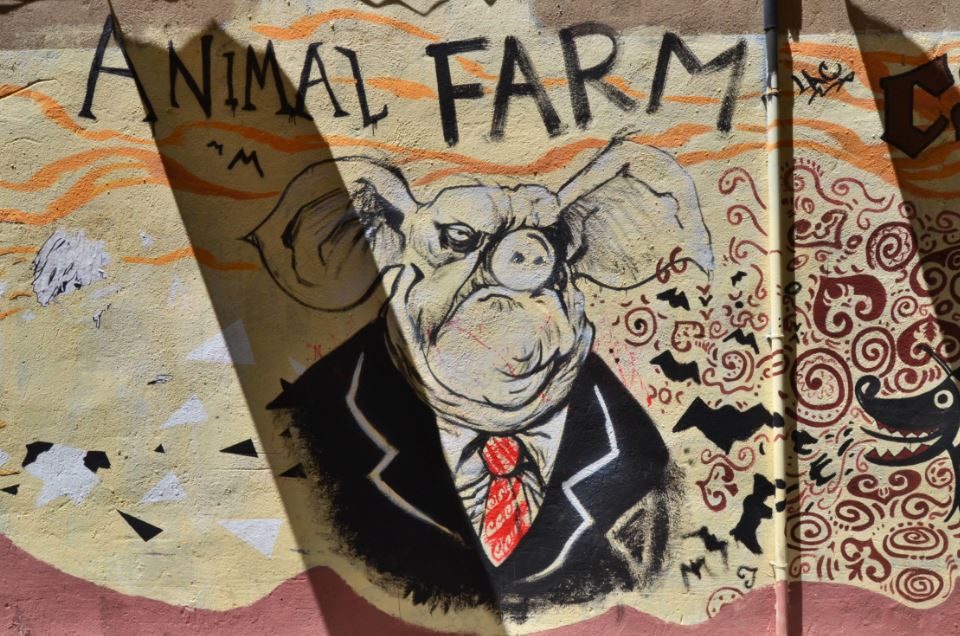
-
On Stefan Hertmans’s ‘War & Turpentine.’
At the heart of Stefan Hertmans’s gorgeous ‘War & Turpentine’ is the gruesome knowledge that much pain and suffering underpin our beautiful world.

-
On districting, or how much your vote matters.
If our political representation doesn’t match the popular vote, it’s hard to swallow the lie that everyone is being treated equally.
Bill Bishop, clustering of like-minded people, David Daley, districting, gerrymander, gerrymandering, ideological isolation, political divisiveness, political obstruction, politics, proportion of representatives do not reflect popular vote, Ratf**ked, Ratfucked, redistricting, rigging the vote, subverting democracy, The Big Sort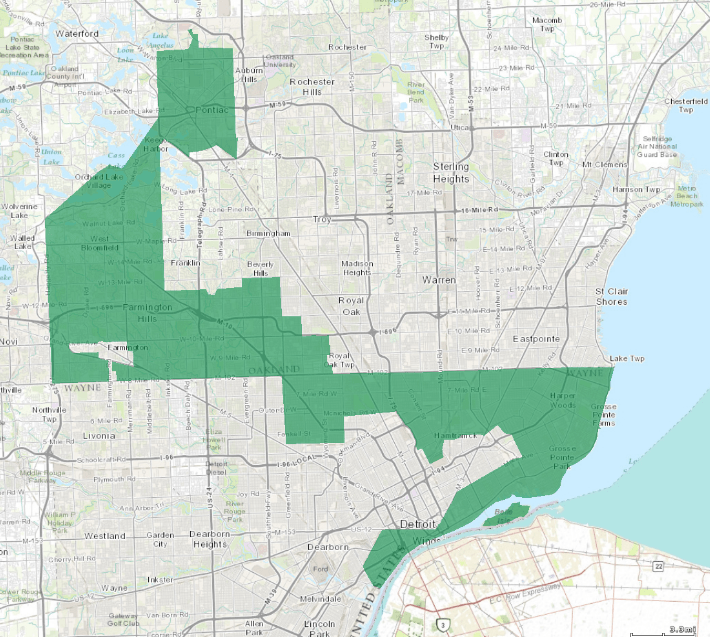
-
On Colson Whitehead’s ‘The Underground Railroad.’
In Colson Whitehead’s new speculative fiction, he condenses a century of racial injustice into a single fugitive’s journey. I hope readers realize the reality was even worse, that some of these crimes spanned the century and reverberate still.
alternate history, animal welfare, Blood at the Root, Carol Anderson, Colson Whitehead, curses, Douglas Blackmon, emancipation, evil, Forsyth County, fugitive slave act, graduate school, Harriet Washington, incarceration crisis, Lewis Hyde, Medical Apartheid, Michelle Alexander, oppression, Patrick Phillips, police brutality, review of The Underground Railroad, science fiction, slavery, Slavery By Another Name, speculative fiction, Stanford, The Gift, The New Jim Crow, The Underground Railroad, Thirteenth Amendment, trust, Tuskegee Syphilis Study, vegan, vegetarian, whose pain matters, witchcraft
-
On Don Delillo’s ‘Zero K’ and the dream of eternal life.
Would it be easier to use artificial intelligence to resurrect the more self-absorbed and robotic among us?
aging, artificial intelligence, biology of aging, caloric restriction, cellular biology, don delillo, freeze my brain, heat death of the universe, immortality, lifespan, limited senescence, lobsters, mechanical mind, meditation, memory, Mr. Darcy is a weird dude, neurology, pride and prejudice, psychology studies, simulating a human brain, social psychology, synaptic connectome, telomere elongation, the inevitability of death, Turing test, White Noise, why do we die?, zero k
-
Subscribe
Subscribed
Already have a WordPress.com account? Log in now.
 Frank Brown Cloud