Racial oppression
-
On Bryan Stevenson’s Just Mercy.
Just Mercy: an achingly-beautiful account of the arduous pursuit of justice for all.
abuses of power, brain plasticity, Bryan Stevenson, children sentenced to death in prison, civil rights march, death penalty, EJI, Equal Justice Initiative, execution, false conviction, Ferretcraft, heroic human rights worker trading card game, innocents condemned to death, Just Mercy, Lydia Cacho, Midwest Pages to Prisoners, New Life New Leaf, police abuses, post traumatic stress disorder, PTSD, racial disparities in the criminal justice system, racial injustice, Slavery Inc, solitary confinement, state-sponsored murder in the United States, the human potential for growth and change, Walter McMillian trial, with liberty and justice for all, wrongful imprisonment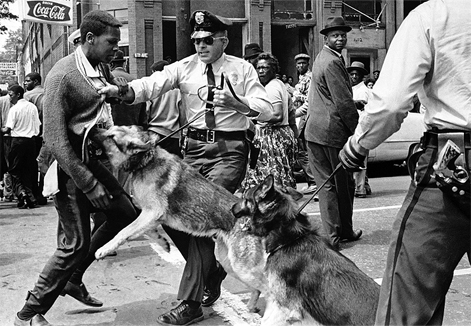
-
On silenced voices.
Today’s mystery is, when is a mystery novel not marketed to readers of mystery novels?
black history, Candravati Ramayana, Dravida Kazhagam, Dravida Kazhagam interpretation of the Ramayana, erasure, free will, history is written by the victors, James Meredith, my own fragmentary education, mystery novel, Nabaneeta Dev Sen, Nat Turner, Parul Sehgal, Percival Everett, prejudice, racial protests at elite universities, Ravana worship, Rudolph Fisher, Satan worship, shelving all black authors under African American Studies, silenced texts, silenced voices, The Conjure-Man Dies, The Iliad, the invention of race, University of Mississippi, yale protests
-
On non-violence (part 2): empowering kids to act for equality.
Even second-graders can make consumer choices that contribute less toward climate destabilization.

-
On Mat Johnson’s Loving Day and wanting to fit in.
My condolences to those who feel as though it’s their heritage never to fit in. Growing up, I didn’t fit either. But I had no expectation of fitting in. I was an outlier by virtue of who I was, not who my parents were. And presumably I could’ve learned to talk differently, to act differently,…
ancestry, brain imaging, brains, Caitlyn Jenner, choosing our identity, contemporary literary fiction, Danzy Senna, differences between male and female brains, differences between men’s and women’s brains, Elinor Burkett, feminism, feminist, Gina Rippon, identity politics, Loving Day, Mat Johnson, mixed-race, multicultural, nail polish, race, review of Mat Johnson’s Loving Day, rudely claiming that all black art is “urban”, The Mulatto Millennium, The Sympathizer, tribes, urban, urban fiction, urban graphic novels, Viet Nguyen, what does it mean to be black, What Makes a Woman, what should a black man look like, who is black
-
On sex work, reparations, a global wealth tax, and the connection between the three.
Many people are upset that Amnesty International finally came out in favor of decriminalizing sex work. Not me. I think decriminalizing sex work is a step in the right direction. Sex workers’ lives are often miserable. Their underground status denies them police protection; instead, they are often actively abused by the police. The philosophical rationale for…
a good idea in theory, abuse of power, Amnesty International, amphetamines, arguments against legalizing drugs, Ayn Rand, Behind every great fortune there is a crime, black market heroin is unsafe, childhood nutrition, communism, cotton, creepy parallel between gene duplication and oppression, decriminalization, decriminalized prostitution, decriminalized sex work, economic reparations, empirical evidence, feminism, feminist, free school breakfasts, free school lunches, global wealth tax, guaranteed income, heroin, heroin overdoses, history of United States, how did the United States become a superpower, how high would the wealth tax need to be to guanantee everyone a subsistence income, how much money do people need to live, human dignity, human rights trading cards, immigration, immigration laws, income inequality, inequality, justice, land entitlement, legalized prostitution, legalized sex work, link between current wealth and slavery, Lydia Cacho, misogynistic culture, misogynists, misogyny, original sin, police abuse, poverty, Poverty Impedes Cognitive Function, price and demand, price equilibrium, prostitution, quality control, racist home loans, racist lending policy, reparations, school funding, selling organs, sex slavery, sex work, slavery, Slavery Inc, supply and demand, Ta-Nehisi Coates, The Case for Reparations, United States, violence in Mexico, War on Drugs, War on Drugs harms Mexico, wealth begets wealth, wealth inequality, wealth tax, welfare, where did United States wealth come from, which laws are fair, which laws are just, who should receive reparations, why are drugs illegal
-
On slow driving as protest.
My apologies to anyone who has been stuck driving behind me recently. I’ve been driving very slowly. As in, actually following traffic laws. Whereas most people drive between one and fifteen miles per hour over the posted speed limit, I’ve been driving about two miles per hour below posted speed limits. It can be frustrating. …
-
On depictions of (non)violence for the cause of justice.
Graphic novelist Nate Powell, alongside his March co-authors John Lewis & Andrew Aydin, will be speaking in Bloomington next month. I’m excited about the talk. I first learned about Powell’s work by reading The Silence of Our Friends about the civil rights movement in Texas. That book was especially meaningful for me because I’m generally non-confrontational, preferring…
Andrew Aydin, armed rebellion, Between the World and Me, Charles Deslondes, civil rights movement, graphic novels, human violence, John Lewis, March, March book one, March graphic novel, Nat Turner, Nate Powell, nonviolence, protest, racism, racist high school history curriculum, Ta-Nehisi Coates, The Silence of Our Friends, violent rebellion against slavery, when is violence justified -
On inflammatory language & music.
I recently spent an afternoon sitting in the “undergraduate resource room” at Indiana University reading Randall Kennedy‘s The Strange Career of a Troublesome Word (which is not the book’s entire title… but that’s kinda the whole point of this essay). The book is good — a thorough history of our most damaging racial epithet, with special emphasis…
-
On how human different humans happen to be (hint: equivalently human).
I finally read some of the initial papers (circa 1981) describing an outbreak of opportunistic infections among previously-healthy homosexual men in the United States. The case studies are harrowing — a dispassionate litany of suffering, ending with death. And, yes, these are papers from before I was born. I should’ve read them already, or at least…
-
On racism and the empathy gap (while sneakily building toward the idea that teaching kids to root for your favorite sports team might be kinda evil).
There is an unfortunately compelling evolutionary model to explain why humans are so predisposed to racism. The rotten treatment of presumed outsiders may well be a corollary of our genetic inducements toward altruism. Which is grimly ironic, the idea that the same evolutionary narrative could explain both the best & worst sides of human nature. In…
 Frank Brown Cloud