Evolutionary biology
-
A tour of “Newcomb’s Paradox,” in which philosophers who ought to know better argue about the best way to behave in a nonsensical, world-hopping dilemma.
Sometimes, only an irrational choice can help us make the world as good as it could possibly be.
anonymity, anonymous, anonymous action, Blood Test, brains, Charles Baxter, choice, consciousness, Daniel Dennett, emotion, emotions, ensemble behavior of matter, free will, game theory, Hamlet, irrational behavior, irrational choices, irrationality, magical thinking, neural firing, neurons, neuroscience, Newcomb’s Paradox, philosophy, physics, prediction, predictive neuroscience, prisoners’ dilemma, prophecy, quantum computers, quantum mechanics, rational behavior, rational choices, rationality, revenge, Robert Frank, Robert Sapolsky, Roko’s basilisk, Sabine Hossenfelder, science, social opprobrium, storytelling, superposition, The Lion King, The Prisoners’ Dilemma, trust, uncertainty, uncertainty principle
-
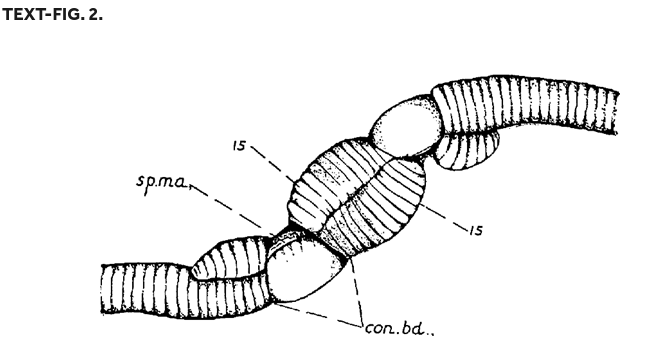
Why are some worms such lazy lovers: a reprise
Even earthworms seem to experience feelings strong enough to overcome the natural tendency of living things to avoid wasting energy.
-
Though we might not turn to stone, an encounter with the basilisk would leave us gasping for air.
An advanced transistor-based intelligence would desire a very different world from one best suited for human flourishing.
AI, AI cars, AI desires, artificial general intelligence, artificial intelligence, atmospheric oxygen, basilisk, best atmosphere for computers, biological intelligence, climate change, computer longevity, consciousness, Death of the Author, deoxygenated atmosphere, extinction, history of life, horror, human extinction, life, Lovecraft, natural intelligence, Nnedi Okorafor, ontological proof of God, ontological proof of the existence of God, oxygen, philosophy, revenge, robots, Roko’s basilisk, science, self-driving cars, self-replication, singularity, thought experiment, transistor aging, transistor oxidation, transistor-based intelligence, what does AI want, what would an AI want
-
Hell is real, and cyanobacteria were condemned to burn, but they might save us still.
Cyanobacteria turned our planet into a place of fire and ice, causing the first mass extinction. Then they too nearly went extinct. Their descendants were imprisoned in the cells of plants. We burn their old prison cells when we drive down the street. And yet, their lineage might save us still.
biology, buffering, carbon sinks, climate, climate change, cyanobacteria, early Earth, early life, early life on earth, energy, evolution, global warming, greenhouse gas, mass extinction, nonlinear response curves, oxygen, oxygen catastrophe, oxygen poisoning, oxygen sinks, photosynthesis, science, sustainability, the evolution of life, the first mass extinction, the invention of fire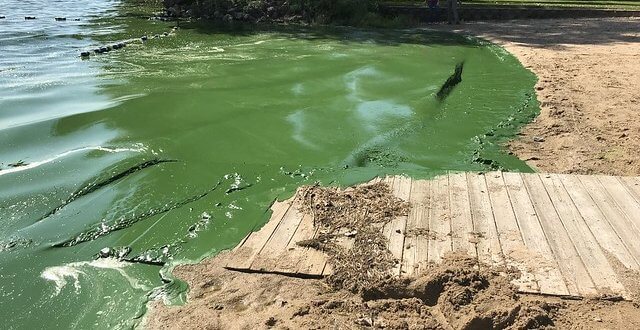
-
People who look like you also belong in the place where you live.
The evolution of human skin color was driven by culture, and in modern times, we are able to adopt cultural habits that will allow us to thrive at any latitude, regardless of the color of our skin.
adaptation, agriculture, dietary vitamin D, evolution, evolutionary biology, fitness, fortifying food with vitamin D, Harry Steenbock, human evolution, human migration, hunter gatherers, impact of culture on evolution, migration, natural selection, racism, rickets, selective pressure, skin color, skin coloration, sun drying food, sun exposure, teaching a more accurate model of the evolution of human skin color, The evolution of human skin color, Vitamin D, vitamin D and skin color
-
Sex was invented to queer populations.
The biological function of sex is to create diversity — which helps populations endure, even if this is bad for individuals — so we should expect diversity in the expression of sex.
audio, biological diversity, biological sex, biological sex in the Talmud, biology, biology of gender, biology of sex, categorization, cell division, chromosomes, climate change, cloning, copying DNA, cost of sexual reproduction, costs of sexual reproduction, creation of new species, culture, definition of male, developmental biology, diversity, DNA, DNA replication errors, evolution, gender diversity, gender expression, gender in the Talmud, genderqueer, how DNA works, how evolution works, invention of sex, LUCA, male, maleness, natural history, parthenogenesis, podcast, population dynamics, Queer, queer natural history, queer theory, reproduction, sex and gender, sex determination, sex determining region of the Y chromosome, sex ed in Indiana, sexual develoopment, sexual diversity, sexual expression, sexual reproduction, speciation, SRY, survival of the fittest, Talmud, the invention of sex, types of gender in the Talmud, types of sex in the Talmud, what does it mean to be male, why aren’t we clones, why is there sexual reproduction, Y chromosome
-
In dispraise of efficiency.
Contemporary economic interests seek greater & greater efficiency, but the most meaningful moments in our lives are the inefficient tasks to which we devote our time.
assembly line, beautiful ones, behavioral sink, biology, Capital, capital gains, capitalism, cell biology, cell division, chores, communication, comparative advantage, economics, efficiency, factory model, function of earth, function of life, health, Henry Ford, immortality, in the belly of my brother, John Calhoun, last universal common ancestor, Mary Oliver, metabolism, mitochondria, mouse dystopia, mouse utopia, opportunity cost, philosophy, photon scattering, quotidian time, Robin Wall Kimmerer, science, slow fire, specialization, store my food in the belly of my brother, The Serviceberry, wild and precious life
-
Why are some worms such lazy lovers, and why on Earth should we care?
For an experienced partner, worms pull out all the stops. Okay. Gross, maybe, but okay. And yet, knowing this helps lead us to a feminist reappraisal of other animals’ behaviors … including humans.
Alberto Velando, animal behavior, animal behaviors, animal desire, animal studies, biology, care, caretaking, caretaking and sexuality, cooperative equilibrium, coral, earthworm, earthworm erotica, earthworm sex, evolution, evolutionary biology, evolutionary game theory, fish, game theory, game theory in evolutionary biology, Grove & Cowley, male care of babies, male care of offspring, Marah J Hardt, mating habits of worms, nature, parenting, paternal care, red worm, science, semicooperative equilibrium, Sex in the Sea, sex life of earthworms, sex life of worms, sperm competition, stickleback predator inspection, sticklebacks, sticklebacks stealing eggs, Velando Eiroa & Dominguez, Velando et al, weird science, worm, worm mating, worm sex -
On skin color and sexual selection in humans.
Somehow, many male biologists failed to notice that whichever sex does more caretaking typically has more control over mate choice …
aesthetic preferences, agrarian, agrarian cultures, agriculturalists, agriculture, ancient human diets, ancient human evolution, ancient human skin color, animals, birds, bowerbird, caretaking and mate access, caretaking and mate choice, caretaking and sexual choice, childhood mortality, club winged manakin, club-winged manakins, cultural differences, Dawn of Everything, depigmentation, dietary influence on the evolution of skin color, epidermal melanin, evolution, evolution of beauty, evolution of cuteness, evolution of depigmentation, evolution of epidermal melanin, evolution of skin color, evolutionary theory, evolutionary trade-offs, female mate choice, fitness costs, folate, gamete size, human attraction, human caretaking, human culture, human evolution, hunter-gatherer cultures, hunter-gatherers, inequality, male control over reproductive success, male mate choice, mate choice, melanin, nature, peacock mating, peacocks, reproductive success, resource control, resource distribution, science, sexual attraction, sexual dimorphism, sexual dimorphism in human skin color, sexual selection, sexual selection of skin color, skin color dimorphism, skin color hypothesis, skin tone, smooth guardian frog, tamarins, Vitamin D, why are babies cute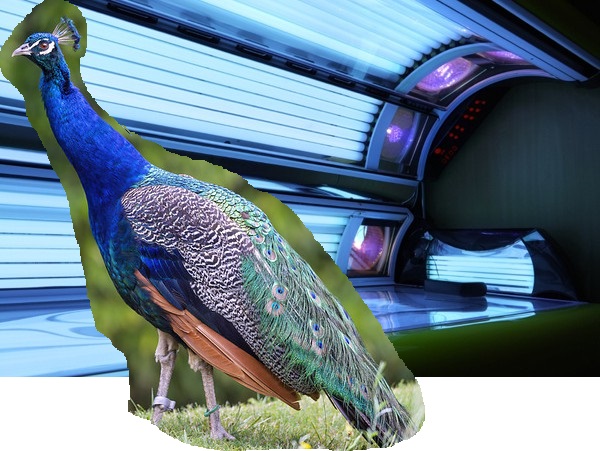
-
On the timescales of apocalypse.
The world is not at risk. The world has been through this before. But human civilization has never experienced such change.
10 million years of climate, 10 million years of climate change, 20 thousand years of climate, 20 thousand years of climate change, 500 million years of climate, 500 million years of climate change, assessing past climate, average global temperatures, climate, climate apocalypse, climate change, climate change and evolution, climate change during history of civilization, climate change in human evolution, climate science, environment, environmentalism, evolutionary pressure, feedback loop, global temperatures, global warming, human evolution, ice cores, isotope analysis, Kristin Bergmann, mass extinction, paleoclimatology, past climate, past climate change, science, the history of civilization, timescales of climate change, when has climate change happened before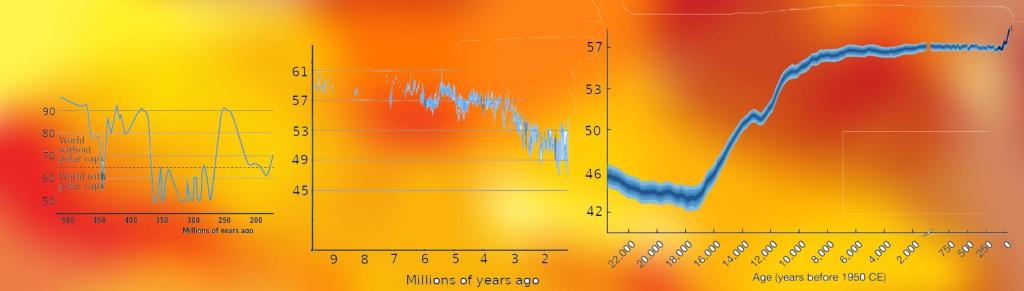
 Frank Brown Cloud