Economics
-
More on violence against women … sexism, in particular.
This is second in a series. Find the first essay here. Given that I’ve been writing about violence against women in a university setting, it’s probably worth slapping together an essay about the paucity of female professors, specifically in the sciences. And this is something that’s been addressed quite often, so quite possibly you’ve read a…
-
On deficit spending.
I generally like Paul Krugman’s opinion pieces. I think he does a good job of explaining economic concepts in terms that the average reader can understand, and I like that his biases — because economics is a sufficiently squishy subject that your preexisting biases could lead you to diametrically opposite conclusions even when analyzing the…
-
On the origins of war.
Recently someone suggested Barbara Ehrenreich’s “Blood Rites” as a companion piece to read alongside Karen Armstrong’s “Fields of Blood” (see a recent post inspired by the latter here). Which seemed reasonable enough; both works attempt to explain war and where it comes from. And although I hadn’t expected to be overly fond of Armstrong’s work…
-
On the creepy parallel between gene duplication and oppression – as inspired by a passage from Karen Armstrong’s “Fields of Blood.”
“If, as has been shown for ethnographically documented hunter-gatherers, women in the most meat-dependent foraging societies spend less time procuring food and more time engaged in the production of technology and performing nonsubsistence tasks, then Clovis women likely spent the majority of their time not gathering plants. In this sense, equating women solely with plant…
-
On Y chromosomes, surnames, and reproduction.
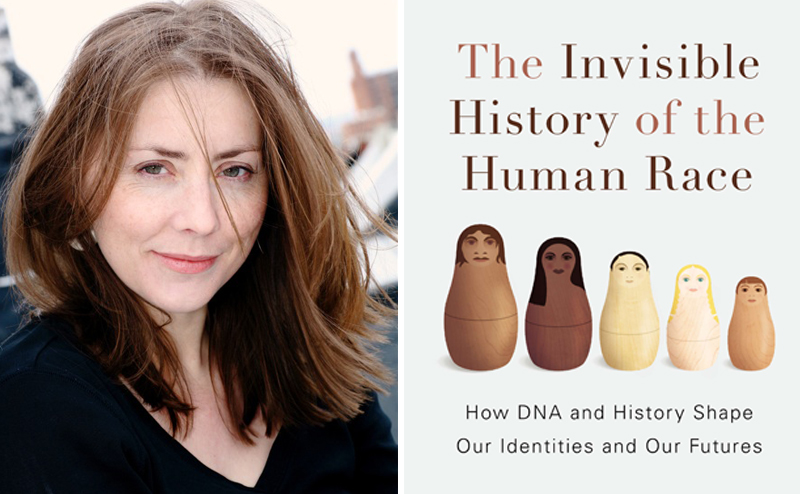
For me, the most interesting section of Christine Kenneally’s “The Invisible History of the Human Race” was the section on Y chromosomes. Because, sure, if I’d spent a moment thinking about it I would have realized that sons of sons of sons carry the same Y chromosomes as their forebears… but it isn’t something I’d…
-
On organ trafficking.
The New York Times has run several features recently discussing organ trafficking from living donors. As in, paying somebody to go under the knife and have an organ cut out in order to give it to you. Typically kidneys, since humans can get by with one but are born with two. And, yes, currently illegal in this…
 Frank Brown Cloud