#
NOTE: this essay contains descriptions of violence, neglect, and drug overdose, hopefully leavened by some interesting science and mythology
#
I was six years old when my parents enrolled me in martial arts. On Tuesdays and Thursdays, my mother would drive me to the small cement-floored studio where I took karate.
Outside the studio, there was a wooden sign showing an image of a red fist on a white background. Inside, there were metal folding chairs in the foyer where my mother could sit; a small sink at the back where I could drink water from my cupped palms; an intervening mostly empty space with its cold hard floors where we practiced our techniques, forms, and sparring.
And there was was discipline.
The studio was named after an English transliteration of the Japanese word for discipline, and discipline was the greatest gift that I received from my four years of training there. I learned to sit still. I learned to stand silently at attention. I learned to practice each technique long past when I’d felt that I understood it – after claiming that I already knew how to do a roundhouse kick, I was sent to the punching bag to continue performing roundhouse kicks for the remaining forty minutes of that week’s class. Afterward, I did understand the roundhouse kick a bit better. As well as the importance of keeping my mouth shut.
I believe that a hope for the latter lesson may have motivated my parents to enroll me in the class. I was a small child – measuring in the bottom percentile for height and weight until midway through my sophomore year of high school – and I was presumably obnoxious in the way that clever, precocious children on the autism spectrum sometimes are. I had an uncanny knack for inspiring ire in my school classmates, older students, teachers, administrators, and strangers. It probably seemed like a good idea for me to be taught discipline. And also how to defend myself.
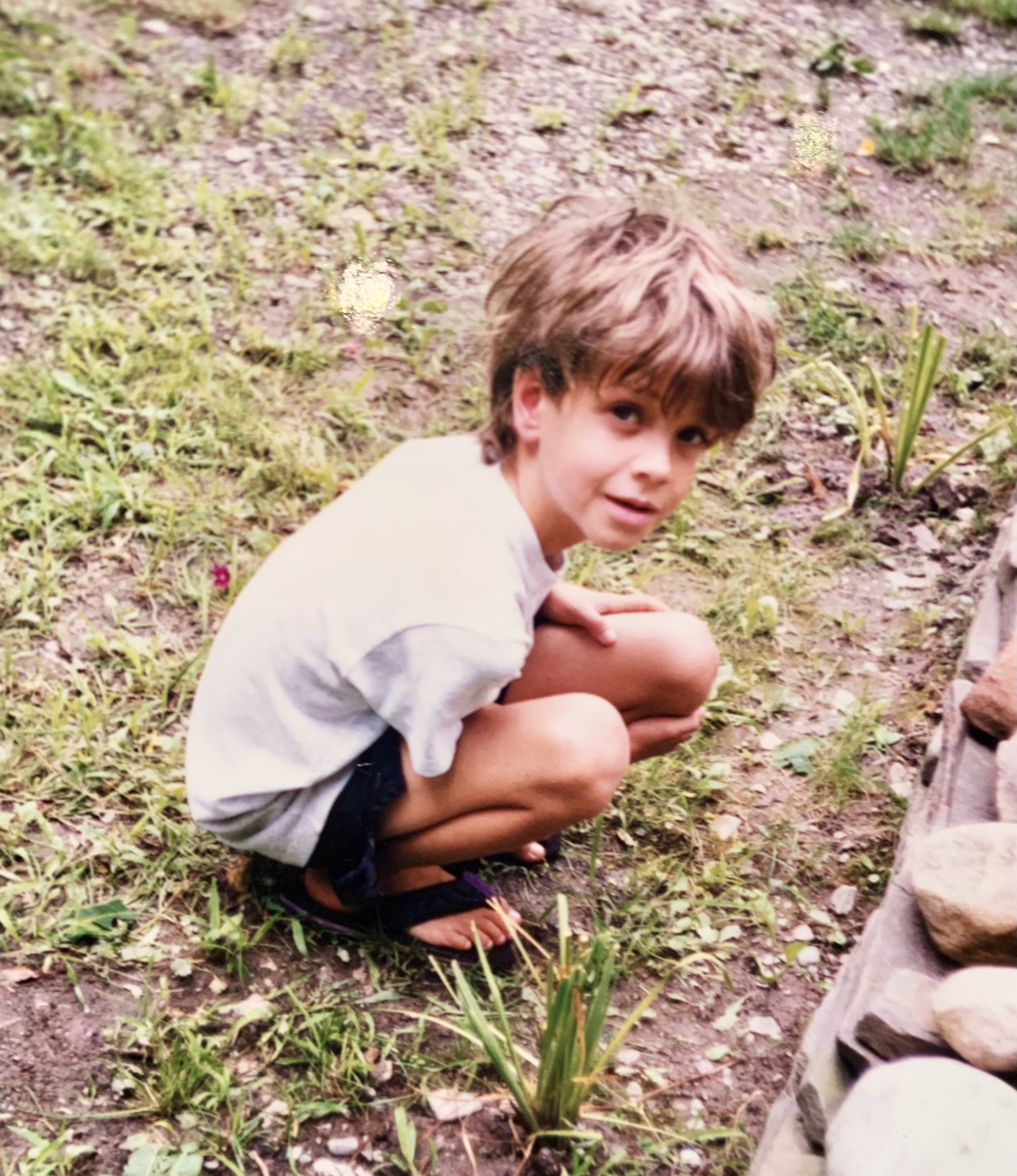
Indeed, I often ended up in “fights” on the playground, in the backs of classrooms, in the hallways of my schools. Over the years, these ranged from groups of third graders chasing and tackling that insolent first grader, to angry middle schoolers shoving me into banks of lockers. But these were “fights” in only an ineptly lopsided way: my body might be shoved or tripped or tackled, I was perhaps punched or kicked, but I never hit back.
I loved sparring. Although I was often much smaller than the people with whom I trained, I’d become fast, spirited, and resilient. I’d learned to fight well. But I didn’t hit back in the outside world.
Because that was the other crucial lesson that I’d been taught by Virgil Perkins, the gray-haired karate instructor who’d named his studio for discipline: “When you’re afraid that someone might hurt you, you have to stop them. But if you’re not in danger, you don’t have to fight.”
My training had taught me enough to know that the other kids were no real threat to me. At almost any moment, if I’d wanted to hurt them, I could. Which meant I never needed to.1
#
Each fight takes something from us, both in terms of the physical damage we might suffer and in the emotional costs we’ll bear if we have to hurt someone.
In the natural world, the animals able to fight best often do so least. From primates to wild dogs to marine mammals, researchers have documented that outbreaks of violence typically result from weakness and uncertainty among the leaders of a group. Dogs who are unsure of themselves are more likely to attack their pack-mates2; elephant seals will observe each other’s battles, learn to recognize each other’s individual voices, and use their knowledge to avoid combat whenever possible.3
Indeed, if an animal overindulges in violence, eventually that animal will get hurt, and the comeuppance can be devastating. In Determined, neurologist Robert Sapolsky discusses the role of discipline and restraint among primates: “For a male baboon, attaining high rank is all about muscles, sharp canines, and winning the right fight. But maintaining high rank is about avoiding fights, having the self-control to ignore provocations, avoiding fighting by being psychologically intimidating. Being a sufficiently self-disciplined, stable coalition member to always have someone watching your back. Successful alpha-ship is the minimalist art of non-war.”4
When baboon troop leaders lack the confidence to refrain from violence, not only are they likely to lose their position in the social hierarchy, but the entire troop may be endangered. During a fifteen year study of a troop of baboons in Kenya, Amy Samuels and colleagues documented that there was only a single nine-month period of intense strife, after which a small number of formerly high-ranking members lost their social standing. During those few months, though, fourteen out of the nineteen adult troop members sustained serious injuries, several of which resulted in life-threatening infections or impaired mobility.5 This period of internal violence, resulting from individual uncertainty, could have resulted in the troop’s collapse or destruction by outside threats, much as decadent infighting in the Silla kingdom of Korea’s Latter Three Kingdom’s Period led to its conquest by the emergent Goryeo / Koryo empire.6
Numerous sacred stories also warn us that even gods and heroes can suffer calamitous consequences when their lack of confidence induces them to use preemptive, unnecessary violence. These stories have been preserved through the ages because they offer both entertainment and moral instruction on the likely ramifications of our actions. Although I was not raised to revere any particular collection of stories as divine, I love them for their evidence of the ingenuity of those who have come before us, and see in their commonalities trends that span human cultures.
Across much of the world, the adoption of agrarian practices led to a rise in interpersonal violence, often on a far larger scale than had been present among hunter-gatherers. Agrarians are more likely to claim personal ownership of resources that might seem enticing to others, such as preserved food, domesticated animals, and improved land. Additionally, the increased population density of agricultural societies could better support a non-food-producing military caste.7
And so it is largely from the sacred stories of agrarian cultures that we learn about the deadly ramifications of unnecessarily preemptive violence. In these cultures, people were more likely to have experience with the tragedies that befall both the victims and the perpetrators. Many people are likely aware of such stories from Greek mythology, including the fall of Kronos8 and the tragedy of King Laius (Oedipus’s father), but here I’d like to highlight the warnings against preemptive violence from a diverse set of sacred stories from agrarian cultures in Mesoamerica, Northern Europe, Korea, India, and the Middle East.
In the K’iche’ Popol Vuh from maize-based agrarians in Mesoamerica, the death gods of Xibalba are envious of human raiments worn to play handball; the gods challenge a pair of brothers to a handball match but, uncertain as to their prospects of winning, the gods instead murder the brothers before starting the match.
Through this act of violence, the Xibalbans orchestrate their own downfall. One of the murdered players sires children even after his death, and then, years later, the gods challenge these descendants to a handball match as well. The gods attempt to subvert this match with more preemptive violence: in place of a rubber handball, the gods substitute a globe of blades, honed sharp and pierced through with shards of bone; in between rounds of play, the gods confine the opposing players to treacherous accommodations, including a house of fire, a house of jaguars, and a house of bats, wherein (as translated by Michael Bazzett), “a single death-bat did them in. It descended, dropping like a blade” and separated the player’s head from his body.9
Even after the gods play a full match of handball and admit defeat (the rules of the game are never entirely clear, but the gods concede after inadvertently smashing a squash that had been secretly swapped for the ball), they still pursue violence, attempting to plunge the players into a cooking pit. In recompense, the players finally retaliate, killing the leaders of the Xibalban death gods. The human players would not have fought back – indeed, they would not have traveled to the Xibalban realm – if not for the gods’ history of unpremeditated deceit and violence.
In Snorri Sturluson’s 13th century Old Norse Prose Edda from cereal- and dairy-based agrarians in Northern Europe, Odin and his council of gods become fearful of Loki’s wolf-child Fenrir, believing that the growing wolf might soon exceed them in strength. The gods have raised the child but decide to preemptively shackle him.10 The gods frame their deceit as a playful challenge, imploring the young wolf to allow himself to be bound by various chains in order to test his strength; repeatedly the gods promise that they will release him if the wolf is ever unable to burst free.
But as soon as the gods identify a binding that the wolf-child cannot escape, they chortle in triumph and pin him to a rock outside their kingdom. In that moment, Fenrir, who otherwise would have acted as the gods’ champion and protector, declares himself to be their enemy. Fenrir froths and salivates with rage, and will one day enact revenge by escaping his bonds and devouring both Odin and the sun. Their preemptive, deceitful violence proves ruinous for Odin and his fellow Asgardians.
In the Korean muga (a ritual song of a sort that often incorporates sacred stories) “The Origin Song of the House God,” the hero Hwang Uyang is commanded to travel to the kingdom of heaven to rebuild a divine tower after a storm, and his family endures calamity due to his lack of discipline.11 There is no definitive, canonical version of this story – in Korea, sacred stories seem to have been passed down through an exclusively oral tradition for hundreds or perhaps thousands of years,12 with the first transcriptions appearing in the 13th century by Buddhist scholars (who seem to have heavily modified or redacted some of the original stories)13 and many others being transcribed only within the past century.
Most of the changes seem to have altered concepts such as gender roles or the influence of animistic nature spirits on the human world, as these contrasted sharply with the scholarly traditions of the redactors.14 Warnings related to the need for self-discipline, however, are likely to have been preserved unaltered. In the “Origin Myth of the House God,” Hwang Uyang is instructed not to speak to anyone during his journey to heaven, but when he is taunted with rude language, Hwang Uyang cannot restrain his temper. As a direct consequence, his spouse spends three years trapped in a dunghill and eating nothing but rice. (Additionally, the story’s villain, whose unprovoked insults and attempted abduction of Hwang Uyang’s spouse form the crux of the conflict, ends the tale trapped within a stone box. Everyone who acts without discipline eventually suffers.)
In the Sanskrit Valmiki Ramayana from rice-based agrarians in India, a council of gods feels threatened by the chance that a human scholar who has gained an approximation of immortality might someday become their equal. (This scholar, Ravana, is treated as a villain in the canonical epic, but modern commentators from politically-marginalized groups have argued that Ravana can be seen as a representative of both Dravidian ascetic vegetarian Shaivism15 and Sinhala Buddhism16, opposing the Aryan conquest of southern India.)
In Manmatha Nath Dutt’s translation of the Uttara Kandam (the seventh book of the Ramayana), when the god Brahma first recognizes Ravana’s great feats of self-denial and asks what this scholar might want in return, Ravana states that “creatures have no other fear than death, and enemy there is none that is like unto death, therefore immortality is even what I crave.”17 This request is unacceptable to Brahma, but eventually Ravana is granted a vestige of his desire: protection from gods and demons, birds and serpents, the natural and supernatural worlds.
But this gift dismays the other gods. The gods lament that Ravana “sees himself as equal to all, even to us. He need not fear death from beast, demon, or god. The sun cannot parch him; air cannot scorch him; waves will not rise to drown him.”18 And so these gods plot preemptive violence: “Vishnu, you must elect to be born as human, and thereupon you will eliminate Ravana in war.”19
Vishnu succeeds in this endeavor – Vishnu starts a war by mutilating Ravana’s sister, and Ravana dies in the denouement of the ensuing conflict – but Vishnu also suffers greatly as a result of having chosen this life of violence. He loses both his beloved spouse — first as a prisoner of war, then casting her aside to maintain pride among his people, then watching her be swallowed by a chasm into the earth at the very moment when Vishnu attempts to renew his vows to her – and his beloved younger brother, whom Vishnu sacrifices to Yama, the god of death, in a tragic confluence of errors.
To me, Vishnu’s long and lonely life during this human incarnation calls to mind a line from Charle’s Baudelaire’s poem “The Voyage,” as translated by Wallace Fowlie: each brief episode of violence, such as those described above, as well as murdering the king of the vanaras when that king was engaged in a formal duel with someone else,20 exists as “an oasis of horror in a desert of boredom.”21 The god repeatedly finds victory in battle, but he never finds joy. It seems as though the violent origin of his human existence may have doomed the enterprise from the start.
In the Babylonian version of The Epic of Gilgamesh from cereal-based agrarians of the Middle East, King Gilgamesh feels inspired to seek out and kill Humbaba, the protector of the forests, so that the Babylonians will be free to despoil the forests and extract the timber they desire for their plethora of construction projects. Gilgamesh travels to Humbaba’s home with violent intent, and Gilgamesh lures Humbaba into battle by chopping down the trees that he knows Humbaba has sworn to protect.
After a relatively brief battle – surviving accounts of which are highly fragmentary – Gilgamesh has an opportunity to show mercy. Humbaba begs for his life, and promises to devote himself to servitude and even cut down the forest at Gilgamesh’s command. But Gilgamesh fears that he might someday be overpowered and so chooses to kill Humbaba instead.
With his dying breath, Humbaba levies a curse: Gilgamesh will have to watch the man he loves waste away and die. Soon Gilgamesh finds himself cradling his lover’s weakened frame as he dies, and Gilgamesh falls into a deep despair from which he never recovers. Contemporaneous audiences would have been aware of a second, unstated curse as well: desertification was common in areas around major Babylonian cities where the forests had been cleared for timber.22 Humbaba had a good reason for protecting the forests, and when Gilgamesh struck him down, Gilgamesh set in motion a tendency toward ecological devastation that resulted in repeated drought, famine, and disease epidemics for the Babylonian people.
If Gilgamesh had shown mercy in that moment, he wouldn’t have lost his passion for life. Because he didn’t have the confidence to let Humbaba live, Gilgamesh wrought an early death for his lover and led his formerly lush kingdom to collapse beneath winds of dust.
In each of these tales, the gods or heroes doomed themselves when they chose violence. And I find it intriguing to imagine an alternative – if they’d had the opportunity to train in martial arts, and could have developed their powers such that they trusted that they were not in danger, would they have shown mercy and restraint?
#
Martial arts training grants us the option to wait and watch, with the hope that violence will not be necessary to resolve an altercation. The more powerful we become, the more risk we are able to bear before being forced to use our powers. If a school bully pushed me up against a locker, I could laugh it off. By then, I’d had four years of getting kicked while sparring in Karate, another five getting kicked during Taekwondo – compared to that, how was a crude shove supposed to hurt me?

In Stanley Kubrick’s Doctor Strangelove, the eponymous scientist states that “Deterrence is the art of producing in the mind of the enemy the fear to attack.”23 But this is not quite accurate. Martial arts training, inner fortitude, and confidence – these all produce changes in a person that cannot be seen from the outside. Instead, our confidence can be used to cultivate personal restraint – yet another unseen, inner change. Our lives are made more peaceful because our sense of safety gives us an increased opportunity to interpret the actions or intents of others charitably, that perhaps a perceived slight or threat from another was inadvertent or imagined, and thereby exhibit grace. Even when the threats we perceive are definitely intended, if the prospect that we would actually come to harm is limited, we can show restraint. Until we fear that we are in danger, we need not strike.
Which is in stark contrast to the political views espoused by some of the scientists upon whom the Dr. Strangelove character was modeled, particularly the computer scientist and game theorist John von Neumann. By employing logic reminiscent of the Nash equilibrium to a finite-round repeated prisoners’ dilemma,24 von Neumann advocated for the preemptive use of nuclear weapons against any nation that might eventually rival the United States in power and technological capabilities. Von Neumann was described in Life magazine as “one of few scientists to advocate preventative war, and in 1950 he was remarking, ‘If you say why not bomb them tomorrow, I say why not today? If you say today at five o’clock, I say why not one o’clock?’ ”25
A person who fears that a situation will soon be wrest from their control might strike first; with confidence, we can wait.
In the Hebrew Genesis, Yahweh is often depicted as doubting his powers, believing that his creations might soon outmatch or equal him. When Yahweh realizes that his creations have discovered his deceit and learned that they are not doomed to die from having eaten a particular fruit, but rather that Yahweh had always intended for them to be ignorant and mortal, Yahweh utters a curse – “Behold, the man is become as one of us, to know good and evil: and now, lest he put forth his hand and take also of the tree of life, and eat, and live for ever,” – then Yahweh chooses violence: “So he drove out the man, and he placed at the east of the garden of Eden Cherubims, and a flaming sword which turned every way, to keep the way of the tree of life.”26
At that time, Yahweh seems to suffer no negative results from having chosen preemptive violence, but he exhibits the same tendency in later stories and inadvertently grants his creations the gift they’ll need to one day rival his early feats. The survivors of a great flood attempt to build an elevated city (עִ֗יר וּמִגְדָּל֙ which translates to “a city and an object or edifice with the property of being גָּדוֹל,” which typically means either “big” or “great”27), which would make them immune to the violence that Yahweh had inflicted upon their ancestors. Upon completion, this elevated city would protect them from being “scattered abroad upon the face of the whole earth.”
And so, much like John von Neumann advocating in 1950 that the United States military launch an immediate nuclear strike against Russia, lest our threat soon be nullified by their own deterrent potential for violence, Yahweh strikes first. Seeing the humans’ progress toward their defensive edifice, and, fearing that “nothing will be restrained from them, which they have imagined to do,” Yahweh wrests from their minds all knowledge of their original, unified language, and then “scatter[s] them abroad from thence upon the face of all the earth.”
As Abdelfattah Kilito describes in Robyn Creswell’s translation of The Tongue of Adam, “After Babel, men cannot seek to rival God as they seemed to do when they began building the tower. They cannot, because they’ve lost the original language. God’s confusion of tongues ensures his supremacy.”28
We humans have apparently never lacked for engineering prowess or materials – mud-made bricks and slime for mortar would have been enough to rival Yahweh’s heavenly throne. The only impediments have been our occasional misunderstandings, the inevitable semantic drift of translation. By diversifying our languages, Yahweh intends to curse humans to remain upon the ground, scattered in a kingdom unconnected to his, where he can continue to lord over us with the threat of violence. And yet, this act of preemptive violence – confounding the humans’ language – inadvertently improves our species. Diversifying our language also diversifies our thoughts and approaches to solving problems, allowing us to accomplish far more than if all humans shared a monolithic, invariant pattern of speech and ideas.
Kilito elaborates upon the contrast between Yahweh’s intent (a curse) and outcome (a blessing) when he describes the Quaranic origin of Arabic, which Ismael spoke after forgetting the language of his father: “This rupture in language must have been brutal: in a blinding instant, one language is erased and cedes its place to another. … This alteration, due to divine intervention, also affected his character and his nature, in such a way that his whole personality changed.”
Benjamin Lee Whorf formalized the idea that the languages we speak might constrain the workings of our minds; the strong version of the Sapir-Whorf hypothesis is encapsulated by the phrase, “Language shapes the way we think, and determines what we can think about.”
This hypothesis is obviously overstated – animals that appear to have no metaphorical spoken language are still perfectly capable of thought, and humans who speak languages that lack certain words or verb tenses can still understand the underlying concepts.29 But the basic idea is correct – it seems easier to have thoughts that can be succinctly expressed in languages that we understand. Language is not a rigid prison confining our minds, but rather acts as a current, easing us toward certain sorts of thoughts.
For example, a shout when charging into battle might seem reflexive – many animals growl, bark, or hiss as they strike, and untrained human combatants often yell as well – but, much as Whorf would predict, knowing the term “kihap” can focus our thinking.
The term “kihap” (기합) typically refers to the guttural sounds that punctuate a practitioner’s forms, breaks, and sparring rounds in Taekwondo, but the actual noise is incidental to the etymological intent of the term: it is a concentration (“hap”) of the spirit (“ki”). We expel carbon dioxide from our bodies; we assert our presence by dramatically altering the pattern of compressions and rarefactions in the air; we intimidate others (and embolden ourselves) with auditory evidence of our vigor and determination.
When I first began to study martial arts, I was terrified by the bellows of my instructor, and my own kihaps squeaked out like a startled mouse. I vividly recall the day when Virgil Perkins taught me that the particular sound of a kihap was unimportant: this was near the end of my time studying with him, because his studio closed down a few months later, and on that day I was the only student who had arrived for class. He demonstrated kihaps with my baby brother’s name – with each powerful kick, his roar of the word “Marshall” reverberated through the concrete room. His spirit was focused. Each kihap served its purpose. The sound we heard was unimportant.
I’m a rather gentle and soft-spoken person. I’ve trained myself to often kihap in ways that result in loud sounds when I practice martial arts, but my preference is to exhibit power in quieter ways.
This also has ample precedence in the natural world. Though scientists had long believed that male elephant seals could only assert their dominance by battling or bellowing during mating seasons, a team recently documented a dominant male elephant seal charging away from the contested mating grounds in order to rescue a baby seal who was being pulled out to the open sea by a strong current.30 Among primates, male tamarins are well known to demonstrate their allure to potential mates by caretaking infants in the troop,31 including infants with whom they share no genetic inheritance.32
Indeed, observational biologists have begun to realize that the assertion of strength through caretaking may be far more common than has previously been documented – precisely because such acts of care are unlikely to be accompanied by dramatic bellows, prior generations of scientists were more likely to overlook these moments of kindness or generosity.33
And a quiet voice can itself hold power. For example, almost any male sparrow will confidently sing loudly to announce his location to the world, with what is known as a “broadcast song,” but only the bravest sparrows allow their voices to drop to a lower amplitude in the presence of other males, in a practice that human researchers have termed “soft song.”34 When soft song is employed injudiciously – as by human researchers who intentionally seek to pique territorial sparrows by playing an audio recording of a soft song and presenting a stuffed replica of a bird – aggressive conflict often follows. In other circumstances, soft song can deter violence.
Even a kihap can be a soft song, the spirit gathered in a quiet burst of air. The technique can change the way we carry ourselves through life, far outside the Dojang.
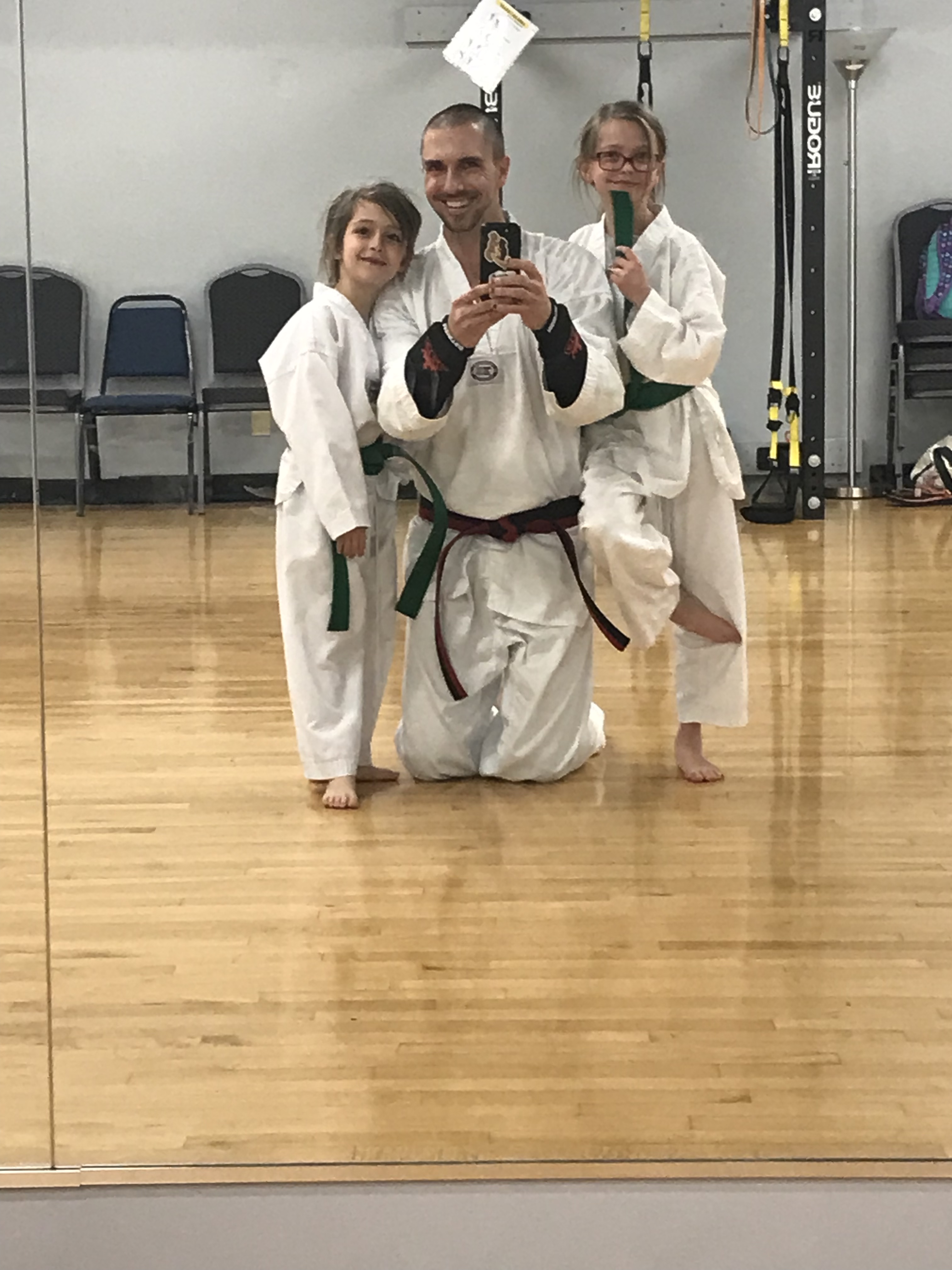
#
Once a week, jail officers lock me in a small cement-floored room with a dozen or so men. Some people are there for drug offenses; many are there due to a history of violence and assault. The system of punishment and incarceration is predicated on the use of violence, and the threat thereof, to take away people’s freedoms. Occasionally, violence also erupts inside: a week before my belt test, a young man was nearly beaten to death inside that jail,35 and he remained incarcerated there for several more months, wrapped in bandages for his broken ribs and mangled face.
Each week, when the steel door slams shut and the guards walk away, I use my silent kihap: a quick puff of air, a moment of focus. I am no longer a small person, but I am significantly smaller than many of the men whom I meet in jail. And yet. I have trained. If I pay attention, I can feel safe.
And so I can calmly volunteer. We sit together to read and discuss poetry. To talk about pain and grief and violence. Which would be quite difficult if I did not feel safe.
One week, we read both Joshua Rathkamp’s “Single Father,”36 about the fear of parenting with diabetes – “I fear my sugar will drop to a drip // in my brain, barely enough to make it run, // to make sweat bead across my forehead, // to make me incomprehensible, inconsolable, // … Sometimes // it must be my daughter who shakes me enough // to open the lid of my life and eat …” — as well as a thematically similar, heartbreaking poem about addiction written by a former member of our class. (I’ll include this poem in full; because people in jail have entrusted me with their words, which might not otherwise reach the outside world, I feel a responsibility to treat them as I would a sacred text.)
#
DADDY WAKE UP
– Travis Combs
I hear the sound of his little feet running
down the hall, I look to make sure the door
is locked, I pull the plunger back, I hear
his joy as he yells, I’m superman.
I do the shot
thinking What if?
What if I fall out, what if he finds
me here, what if his little fingers have to
press 911, something we all teach them to do.
The fear in his voice when he says Daddy
won’t get up. The pain in his heart when
he shakes me, yelling daddy wake up, daddy
wake up.
Then I do wake. The needle
still in my arm, I feel his tears on my chest
as he lays there hugging me, crying daddy
wake up.
#
We’d read this poem aloud, and had begun discuss how these words made us feel, when C. suddenly stood and flung a chair across the room. A leg cracked when the chair crashed into the wall. His hands were shaking, his eyes were red. With a hitch in his voice, he explained why he’d snapped: his girlfriend had been pregnant; she’d overdosed and died. And also, which he didn’t say: inside the jail, it can feel safer to be violent than to cry.
Our classes are not always calm.
But, still, I’ve been granted the privilege to sit placidly and talk with people. On that day, with C., it was even easier – I knew that he meant me no harm, because we’d crossed paths many times over the years, had ridden side-by-side in a mutual friend’s truck on our way to another friend’s funeral – but even when I’m locked in that small cement-floored room with a dozen strangers, I typically feel safe. Martial arts training has built that sanctuary inside me.
And so I can extend that gift to others; my Taekwondo training lets me move through the world as a peaceful presence. I speak softly. Even in tense moments, I can focus myself with a sharp breath of air. I get to practice nonviolence because I know that I am safe.
#
I would like to thank my instructors: Virgil Perkins, with whom I trained from 1989 to 1993; Jim Estes, with whom I trained from 1993 to 1996; Linda Cutcliff, with whom I trained from 1996 to 1998; Neumiro Dasilva, Alice Day, Alexus McLeod, Francis McLeod, and Siddhu McLeod, with whom I’ve trained from 2023 to the present.
I’d also like to thank my family. My parents drove me to martial arts classes for nine years, patiently waited outside, and always congratulated me on my progress. My children’s enthusiasm for Taekwondo has inspired me to resume my training. My partner regaled me with tales of their own progress toward a childhood purple belt. And my spouse enrolled us in the class at the Excel Taekwondo Academy (in addition to being an all-around phenomenal person, without whom my life would not be possible).
- And, in credit to my younger self, I really do think that my choices were motivated by a desire to live up to the expectations set in my martial arts training and not just to stay out of trouble, especially since the latter wouldn’t have worked. Whenever a teacher saw somebody hit me, we’d both be sent to the principle’s office. ↩︎
- Silk, M.J., M.A. Cant, S. Cafazzo, E. Natoli, R.A. McDonald. (2019). Elevated aggression is associated with uncertainty in a network of dog dominance interactions. Proceedings of the Royal Society B: 286:1906. ↩︎
- Casey, C., I. Charrier, N. Mathevon, C. Reichmuth. (2015). Rival assessment among northern elephant seals: evidence of associative learning during male-male contests. Royal Society Open Science: 2:8:150228. ↩︎
- Sapolsky, R.M. (2023). Determined. New York: Penguin Press. ↩︎
- Samuels, A., J.B. Silk, J. Altmann. (1987). Continuity and change in dominance relations among female baboons. Animal Behavior: 35:785-793. ↩︎
- Not that the fall of the Silla kingdom is the most apropos analogy for the infighting of a small baboon troop, but I first prepared a version of this essay while preparing for my first degree black belt test in Taekwondo, and this seemed like a tolerable way to link my martial arts studies to an area in which I have some actual expertise. ↩︎
- There are some exceptions to this pattern; for instance, the concentration of access to high caloric-density marine resources in a small geographic area seems to have led to an early rise of political hierarchy and violence among the non-agrarian people of the Calusa kingdom, in areas that now comprise contemporary Florida. Although prehistoric Korea also had access to abundant marine resources, it seems unlikely that political hierarchy and violence significantly pre-dated the adoption of rice as a culinary staple, because such transitions to agricultural production are often also associated with a transition to more misogynistic, patriarchal societies. In Korea, women held significant spiritual power as “mudang” or “mansin” (oracular shamans) up until the rise of Korean Confusionism during the Three Kingdoms period, suggesting that the prehistoric era had not seen the emergence of a (typically male) military caste. ↩︎
- I typically attempt to include pictures in order to break up the text of these essays, and very nearly included an image of Francisco de Goya’s painting “Saturn Devouring His Son.” But in the end, I couldn’t. It’s just so dark! ↩︎
- Bazzett, M. (2018). The Popol Vuh. Minneapolis, MN: Milkweed Editions. ↩︎
- Sturluson, S. (2005). Trans. J.L. Byock. The Prose Edda: Norse Mythology. London: Penguin Press. ↩︎
- Myths of Korea. (2000). Comp. S. Dae-seok. Ed. P.H. Lee. Somerset, New Jersey: Jimoondang Publishing Company. ↩︎
- Walraven, B. (1994). Songs of the Shaman: The Ritual Chants of the Korean Mudang. New York: Kegan Paul Internation. ↩︎
- Pae-gang, H. (2006). Korean Myths and Folk Legends. Trans. H. Young-hie. Fremont, California: Jain Publishing Company. ↩︎
- Nelson, S.M. (1995). Roots of animism in Korea: from the earliest inhabitants to the Silla kingdom. In Korean Cultural Roots: Religion and Social Thoughts. Ed. H.-Y. Kwon. Chicago: Integrated Technical Resources. ↩︎
- Ganagatharam, A., A. Ganagatharan. (2002). Epic, episteme, and ethnicity: Re-reading of the Ramayana in modern Tamil context. Proceedings of the Indian History Congress: 63: 877-888. ↩︎
- Sanmugeswaran, P., K. Fedricks, J.W. Henry. (2019). Reclaiming Ravana in Sri Lanka: Ravana’s Sinhala Buddhist apotheosis and Tamil responses. South Asia: Journal of South Asian Studies: DOI: 10.1080/00856401.2019.1631900. ↩︎
- Dutt, M.N. (1894). Valmiki Ramayana Prose Translation. Calcutta, India: Deva Press. ↩︎
- Bala Kanda, chapter 15, verse 10, loose translation my own, based on etymologies & definitions provided by D.H. Rao & K.M.K. Murthy at https://www.valmikiramayana.net, 1998-2008. ↩︎
- Bala Kanda, chapter 16, verse 3. ↩︎
- Kishkindha Kanda, chapter 16. ↩︎
- Baudelaire, C. (1963). Flowers of Evil. Trans. W. Fowlie. New York: Bantam Books. ↩︎
- Carolin, S.A., R.T. Walker, C.C. Day, G.M. Henderson. (2018). Precise timing of abrupt increase in dust activity in the Middle East coincident with 4.2 ka social change. Proceedings of the National Academy of Sciences: 116:1:67-72. ↩︎
- Dr. Strangelove or: How I Learned to Stop Worrying and Love the Bomb. Directed by S. Kubrick, written by S. Kubrick, T. Southern, P. George. Columbia Pictures, 1964. ↩︎
- The “prisoners’ dilemma” is a game theory scenario in which two players have the best joint outcome by cooperating, but can improve their personal outcome by defecting, and so a “perfectly rational” player would defect when playing once. With repeated play over a known number of rounds, the final round becomes akin to a single game, and so rational play suggests defecting. This pattern of logic that can be iterated back to the initial round, suggesting that players defect immediately. Which is akin to a lack of confidence. It is the fear of being hurt during a later round that causes players to defect as soon as possible. Indeed, it’s easy to rephrase the prisoner’s dilemma as a game more relevant to martial arts training, in which cooperation is peace and defection is the choice to throw a first punch. The payoff matrix for this “game” would be equivalent to that of the prisoners’ dilemma. ↩︎
- Blair, C. Jr. (1957). John von Neumann, a brilliant, jovial mathematician, was a prodigious servant of science and his country. Life Magazine: February 25. ↩︎
- King James Bible. (2008). Oxford University Press. (Original work published 1769). ↩︎
- New American Standard Exhaustive Concordance of the Bible: Hebrew-Aramaic and Greek Dictionaries. Ed. R.L.Thomas. (1981). The Lockman Foundation. Nashville, Tennessee: Holman. ↩︎
- Kilito, A. (2016). The Tongue of Adam. Trans. R. Creswell. New York: New Directions. ↩︎
- Boroditsky, L. (2011). How language shapes thought. Scientific American: 304:2:62-65. ↩︎
- Allen, S.G., M.J. Lau, S.A. Codde. (2024). An observation of potential altruism by a male northern elephant seal. Marine Mammal Science: DOI: 10.1111.mms.13105. ↩︎
- Kostan, K.M., C.T. Snowdon. (2006). Attachment and social preferences in cooperatively-reared cotton-top tamarins. American Journal of Primatology: 57:3:131-139. ↩︎
- Savage, A., C.T. Snowdon, L.H. Giraldo, L.H. Soto. (1996). Parental care patterns and vigilance in wild cotton-top tamarins. Adaptive Radiations of Neotropical Primates. Ed. Norconk et al. New York: Plenum Press. ↩︎
- Kenkel, W.M., A.M. Perkeybile, C.S. Carter. (2017). The neurobiological causes and effects of alloparenting. Developmental Neurobiology. 77:214-232. ↩︎
- Anderson, R.C., W.A. Searcy, M. Hughes, S. Nowicki. (2012). The receiver-dependent cost of soft song: a signal of aggressive intent in songbirds. Animal Behaviour: 83:6:1443-1448. ↩︎
- “Two Monroe County Inmates Charged with Beating Inmate.” WBIW News, June 8, 2024. https://www.wbiw.com/2024/06/08/two-monroe-county-inmates-charged-with-beating-inmate/ ↩︎
- Rathcamp, J. (2012). “Single Father.” Rattle, 37. https://www.rattle.com/single-father-by-josh-rathkamp/ ↩︎
 Frank Brown Cloud