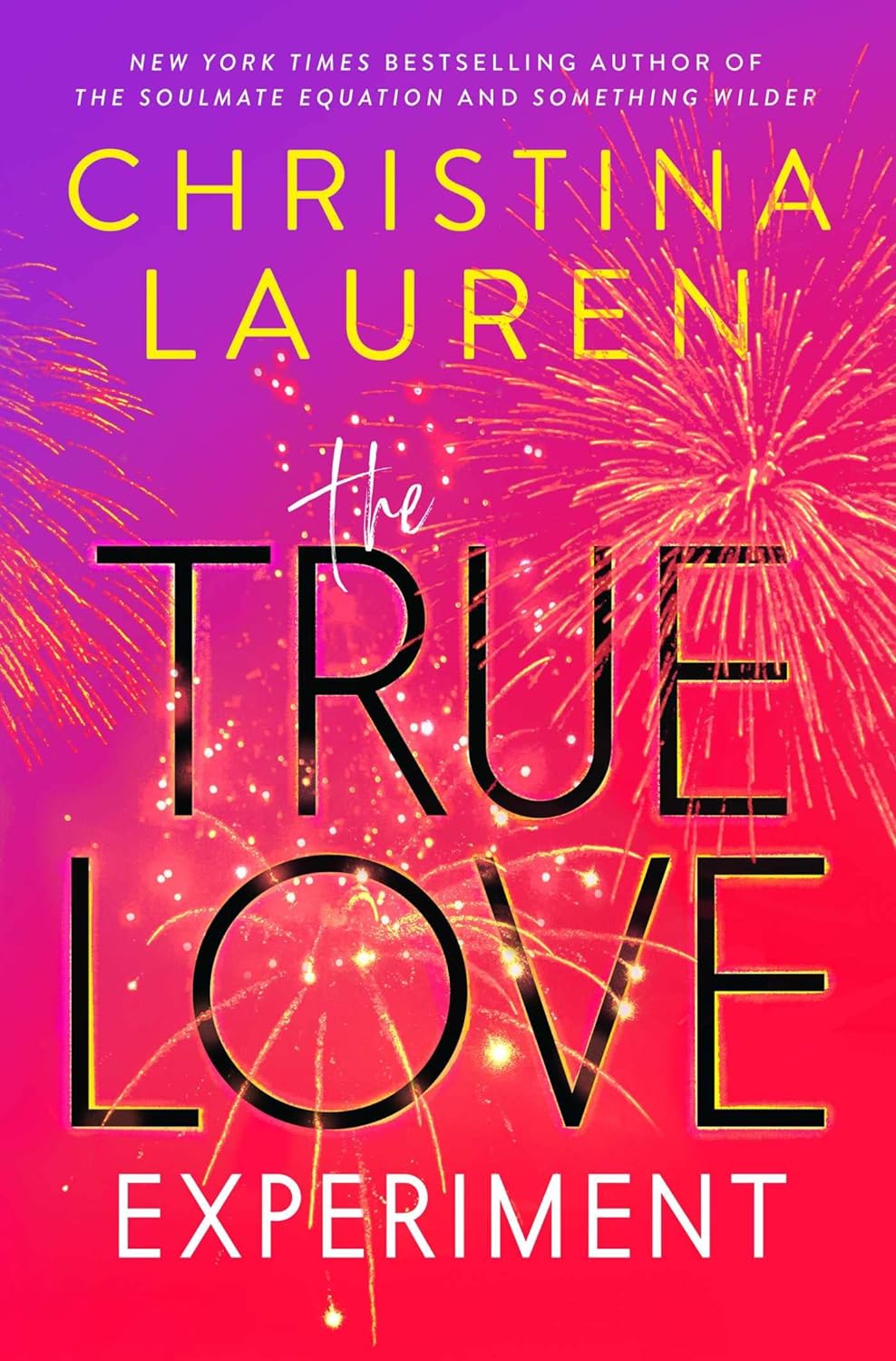
In Christina Lauren’s The True Love Experiment — a charming tale about a reality dating show that indulges every masculine trope from vampire to rogue — an online dating service has begun using genetic data to predict the romantic destiny of its clients. Which might sound like the backdrop for dystopian fiction, but, no, The True Love Experiment is a romance novel. The marketing, cover design, and jacket copy all promise a fun romp toward a happily ever after.
So I felt puzzled about this dating service. Because, honestly, the technology would be bad. Not just in a “hmmm I dunno if that would work” kind of way, but also “ewww gross that’s a little bit evil!”
#
The CEO of this dating company, Dr. River Peña — quite a dashing moniker! – explains that his research team recruited couples who had stayed together for at least twenty years, gave them surveys to determine how happy they were with their relationships, then sequenced everybody’s genomes. Which would produce a huge amount of data! It would be easy to feed all this data to an artificial neural network – these are the inscrutable AI algorithms that tech companies use to power everything from self-driving cars to image generation – and identify patterns that seem to be correlated with relationship success.
But most of the findings would be meaningless. Algorithms like this care only about numbers, not what the numbers mean – perhaps you’ve heard the story about the artificial neural network trained to identify photographs of horses, and the resulting algorithm ignored all pixel data from the horses themselves after deciding that the best clues were found in photographers’ watermarks?
Presumably some number of “silent mutations” would be identified as being correlated with long-lasting relationships. A “silent mutation” is a change in DNA sequence that has no influence on the real world, because the DNA instructions to make any particular protein can be spelled in several different ways, a bit like writing either “gray” or “grey” to mean a blackish-whitish color. A mutation like this can’t affect your personality. But these mutations can give clues about your ancestry. Some DNA spellings are more common among people whose ancestors lived in Europe; other DNA spellings are more common among people whose ancestors lived in Asia.
If a dating algorithm were built using information about relationships that began twenty or more years ago, and if people in prior generations were more likely to date someone whose ancestry mirrored their own, then the algorithm would suggest that same sort of pairing in the future. Racial bias is already a pretty rotten problem with dating algorithms – sociologist Apryl Williams reports that the company that owns Tinder, OKCupid, and Hinge uses a “relevance algorithm” to pair daters, matching them for traits like height, weight, age, income, and ethnicity. The algorithm in The True Love Experiment isn’t explicitly designed to pair people this way, but it would reach that outcome all the same.
This same flaw underpins the use of “crime-predicting algorithms” in policing. Sometimes police departments use artificial-intelligence algorithms to determine their patrol routes – that way, an individual officer can’t be accused of bias.
But the data used to train these algorithms may have been biased. If prior police officers assumed that Black people were more likely to commit crimes, then those police officers probably spent more of their time patrolling neighborhoods where Black people lived. Once there, they’d be more likely to notice any illegal activities. Even if the same number of illegal activities occurred in every neighborhood, police records would list more from Black neighborhoods, because that’s where officers were patrolling. And so that’s where the algorithm will send officers in the future.
Prediction based on past biases won’t generate new insights.
Also, even if there are DNA sequences that correlate with relationship success in meaningful ways, I’d anticipate that most would make a person generally agreeable – a good partner for anyone. There’s some data suggesting that a heterosexual cis-woman is more likely to enjoy the smell of a t-shirt if it was worn by a cis-man whose immune system genes are different from hers. But in terms of personality, I feel like most people would be happier with a kind, compassionate, loving partner than with a partner whose aggression or meanness perfectly mirrored their own.
How much of our capacity for kindness, compassion or love is likely to be determined by our genes, anyway? Perhaps very little. Even traits that most researchers consider to be strongly heritable, like general intelligence, are significantly influenced by our environment and personal history.
History also underpins our relationships. Insofar as I believe in soulmates, I think that this is a bond that two people make, rather than something they’re destined to discover due to their DNA. Love blooms from the memories we share with each other. Our inside jokes, private languages, experiences of offering care and being cared for. After spending years in a relationship, people can become soulmates, but that seems very different from a story about scientific analysis identifying the pre-existing perfect match.
All of which reduced my enjoyment of The True Love Experiment. I felt like every mention of genetics detracted from this otherwise charming story.
#
This might seem like a very intense critique to levy against a romance novel. Don’t these books have a reputation for being beach reads? Guilty pleasures? Cheap paperbacks to churn through and then forget?
Indeed, The True Love Experiment features an ongoing discussion about whether romance novels even qualify as art. “Romance novels are a touch predictable,” one character sniffs, to justify the fact that he’s never read one.
Romance novels do begin with a compact, the exchange of a promise from author to reader: we know in advance how the story will end, and we know that the major characters will be happy when they get there.
All literature begins with a reader granting consent to the author: this affirmation is conveyed through the very act of opening a book and beginning to read. Even if the art therein is intentionally sad or scary – perhaps written with the intent of inflicting emotional pain or fear upon the reader – the reader has willingly entered into the experience. And there’s a safe word. The reader can close the book.
But just because readers have consented to the possibility that an author might hurt them, that doesn’t mean an author should. In the essay collection On Freedom, Maggie Nelson explains her belief that contemporary audiences have been exposed to so much trauma – an increasingly acute awareness of injustice, surveillance, and ecological devastation – that we benefit from kind and caring art. Nelson writes:
“[T]he twentieth-century model imagined the audience as numb, constricted, and in need of being awakened and freed (hence, an aesthetics of shock), whereas the twenty-first century model presumes the audience to be damaged, in need of healing, aid, and protection (hence, an aesthetics of care).”
Romance novels are assiduously crafted depictions of characters in the process of finding pleasure and happiness. As such, romance novels are inherently radical, from both a philosophical and from a political perspective. Romance novels convey the idea that the pursuit of joy is at least as important as power, progress, or fame.
And readers are invited to accompany the characters on their journey, even though the author has promised a known happy ending in advance; in this way, the author conveys the belief that any particular instantiation of a journey is at least as important as its outcome.
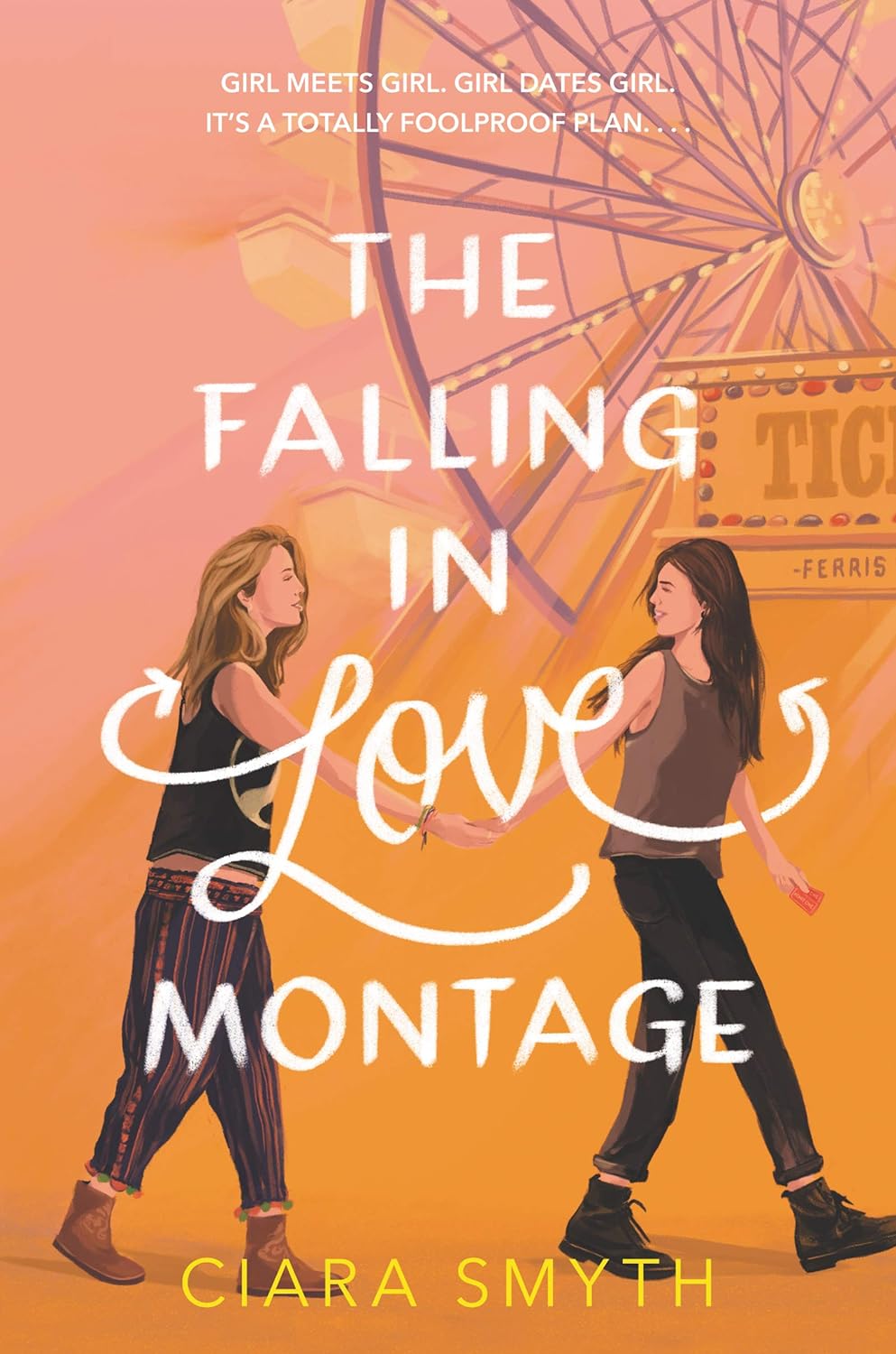
Some romance novels make this radical statement even while acknowledging that happiness is transient. In The Falling in Love Montage, Ciara Smyth introduces readers to a character who has seen her mother’s memory fade from a heritable neurodegenerative disease. This character is initially reticent to form emotional connections because she knows these connections will vanish when she loses her own memory; she learns to embrace the moment to moment narrative of her life anyway, just as readers are invited to experience it.
After all, life is transient. We die. That’s the ending. In the long run, the universe will empty itself of order, after which there will be too little thermodynamic energy for any more life or thought or meaning to exist. But that’s okay. We can still share pleasure with each other, here and now, during this time while we’re alive.
In addition to any merits from beautiful prose, clever dialogue, or big ideas, romance novels matter as art because they depict characters in the act of co-constructing pleasure while pursuing meaningful, caring, ethical lives.
Our lives are finite. These moments are all we have. Romance novels posit that love is worth our limited time.
These two core tenants of romance novels – that it is worthwhile to make an upfront promise to readers not to hurt them, and that the happiness of our creations is no less important than their suffering would be – comprise a serious philosophical stance. Quite possibly, this is what our world needs, far more than well-wrought depictions of misery.
.
.
.
header image from Archives départementales de l’Hérault (France) SACE

 Frank Brown Cloud