Near the end of The Parrot and the Igloo – an excellent book about contemporary energy consumption, climate science, and the vast sums of money that various corporations have poured into the effort to obfuscate scientific findings – author David Lipsky bluntly states that he became an angry and unpleasant person while researching and writing the book.
Day after day, for years, Lipsky immersed himself in documents detailing corporate deceit. Lipsky needed to record the beliefs and public statements of various corporate shills; most of what Lipsky read were lies. And these lies were told with the intent that various corporate entities could continue to eat the future – causing huge amounts of impending harm – for tiny gains today.
But those tiny gains would be theirs, and the huge harms would be other people’s to bear, and this logic simplified the math. As long as I care about myself a lot, and if I don’t care about you at all, then any small gain for me justifies imposing an enormous burden upon you.
The basic story that Lipsky relates about corporate greed is familiar. This is, after all, how the system operates. Capitalism is a bit like evolution this way – outcomes can be modeled as mathematical optimization problems bound by a particular set of constraints – and so we should expect for the entities that best exploit untaxed externalities to flourish. If a particular sort of pollution can’t be definitively assigned to you – carbon emissions, for instance, which are invisible and disperse rapidly – then this should be given no mathematical weight when concocting a strategy to maximize profits.
Yes, yes. This is familiar. A similar story underlies so many instances in which mathematically logical corporate behavior harms us all: monoculture planting, which benefits from efficiencies of scale but has already doomed one popular banana species, and may soon doom another; antibiotic overuse, which helps cattle grow faster but may soon sap all efficacy from the modern world’s greatest medical miracle; fracking, which extracts energy-dense resources but poisons water tables … I could go on.
But Lipsky does more. Throughout The Parrot and the Igloo, Lipsky breathes life into the stories of individual humans who’ve had an outsize influence on our current crisis. After all, history is indiosyncratic. Time has unspooled in a particular way, but things could’ve been different. Again and again, there were opportunities when our world nearly shifted to an alternate path.
This crisis was not inevitable. And yet, here we are.
Lipsky helps readers understand why and how we got here.
#
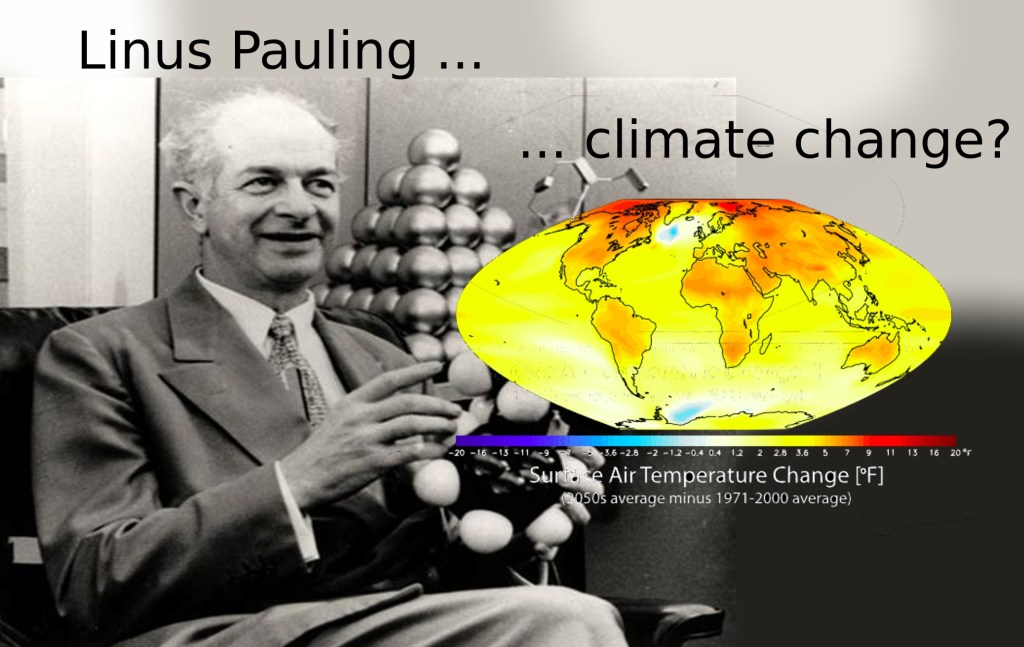
Linux Pauling was a good scientist. He had some ideas that were wrong – he proposed a very complicated model of DNA as a triple helix — and some ideas that were right – the entire subject of organic chemistry, which is often taught (poorly!) in college courses designed to demoralize aspiring medical doctors and convince some portion of them to embark on alternate career paths, is so much easier to understand when you treat it as a drawing class constrained by Pauling’s rules of electronegativity. In general, though, Pauling’s early career was marked by a conscientious effort to observe the world around him, then the attempt to explain each observation with simple statements.
Pauling also used his scientific celebrity in service to good causes. He spoke out against nuclear war at a time when many of his colleagues were still collaborating with the United States military.
Like many scientists, though, Pauling eventually latched on to a few pet theories. And, like all too many scientists, he lashed out crudely and maliciously when his pet theories were challenged.
In his latter years, Pauling became convinced that vitamin C was a miracle drug. He thought that vitamin C could cure a wide variety of maladies, and that, due to its role in the function of our immune systems, we could dramatically improve our health by taking massive doses. If you take vitamin C as a placebo in wintertime to stave off respiratory illness, you can thank Linus Pauling.
(Full disclosure: I also treat myself to these ineffectual fizzy drinks with high doses of vitamin C. Our minds have an enormous impact on our physical well-being, and there’s nothing wrong with taking non-toxic placebos, especially a placebo that you ardently believe will have an effect. I’ve found that it’s relatively easy to convince myself that the placebos of both vitamin C drinks and full-spectrum light-boxes are going to help, because these interventions really feel medicinal. And, due to my belief, they probably do help me … a little bit.)
In actual double-blinded controlled studies, though, vitamin C doesn’t work. Massive doses of vitamin C won’t cure the common cold. Massive doses of vitamin C don’t prevent or cure cancer.
But those cancer experiments, they’ve been going on for a long time. About half a century. Because cancer is awful – in many ways, cancer is a microcosm of capitalism or natural selection, except that it’s occurring within a human body, a certain lineage of cells becoming more prolific at the expense of the organism as a whole – and medical doctors would like to do something.
Vitamin C seems like it should work. Even Linus Pauling thought so!
#
Those cancer experiments, they’re the crux of our story here. The moment when this immunological excursion loops back to the climate crisis.
You see, Linux Pauling had hired a younger collaborator named Arthur Robinson, and Pauling thought that Robinson was exceptionally clever, so Robinson was asked to work on the vitamin C project.
Robinson decided to test whether vitamin C could cure cancer. Mice were given cancers. Then the mice were given vitamin C. Did their tumors shrink?
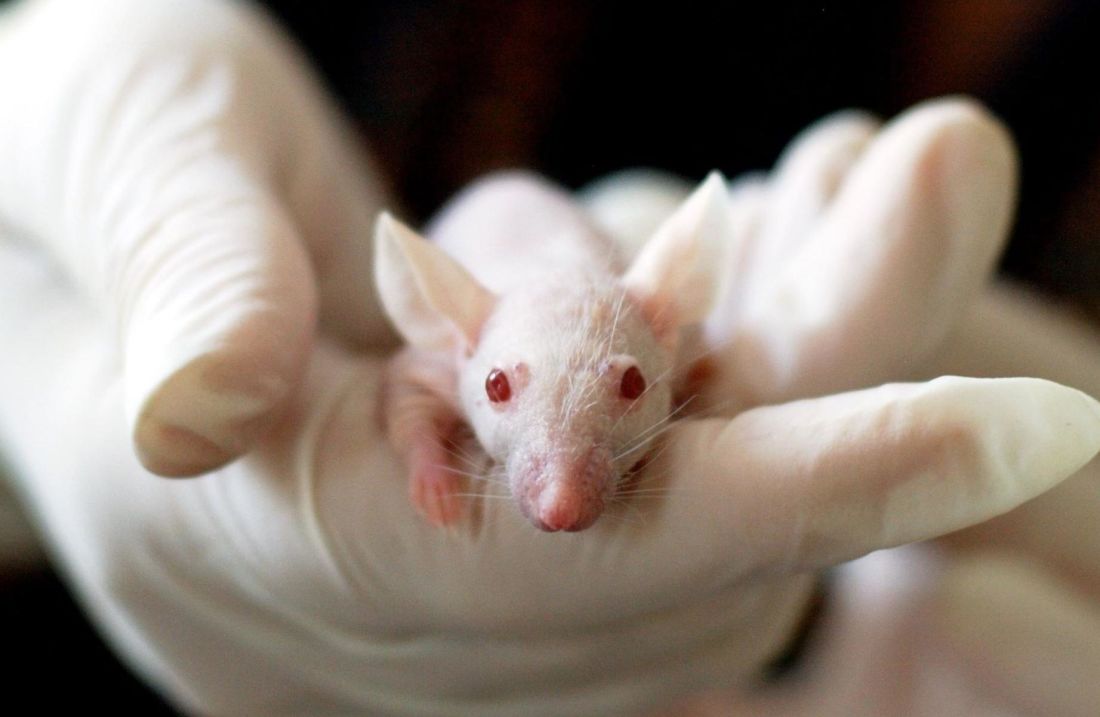
The tumors did not shrink.
Robinson collected all the data, then he brought the results to Pauling. And Linus Pauling was furious. Because, you see, he didn’t want for Robinson to test whether or not his idea was correct. He’d wanted for his collaborator to show that his idea was correct! (This is unfortunately common in scientific practice, especially now that academic scientists often build professional careers out of single ideas. I’ve worked with several such researchers. It’s an invariably unpleasant experience. During my time at Stanford, I became aware of numerous high-profile research papers that everyone working in the labs that had published them knew to be incorrect … but that’s a story for another day.)
Linus Pauling fired his collaborator and then used his own illustrious reputation – he’d won two Nobel prizes! — to destroy Arthur Robinson’s incipient career as a scientific researcher.
A few years later, Arthur Robinson became a prominent climate change denier, inviting various corporations to pay him to lie about science.
#
Obviously, the bulk of the blame here belongs to Arthur Robinson. He was the one who chose to lie at the behest of the oil industry. He’s the one who signed the checks.
And yet, I wonder: would Robinson have lied if Linus Pauling had never destroyed Robinson’s personal trust in academic science? At the beginning of his career, Robinson presumably believed in the scientific method, and believed in the integrity of other researchers, and believed that he could pick up a scientific journal and generally trust the reports that he read therein.
Pauling destroyed those beliefs. Pauling had demonstrated the way that a researcher’s personal reputation might abet scientific malfeasance. Ever after, Robinson had a good reason to distrust the scientific literature. He knew that other scientists were lying, at least some of the time. He’d watched it happen. And his career had been destroyed by his former advisor. Look: scientific research is hard, and it’s not particularly well-paid. When people choose to go into academic research, it’s often because they feel called. It’s work that they love. For Robinson to lose all that must have been an emotionally traumatic experience.
So. Various corporations were willing to pay him to sow doubt? Or maybe … sure, let’s say it: to lie, perhaps? Okay. But also, they’d introduce him at conferences and publicity events as an eminent scientist. Doctor Arthur Robinson. And they’d pay him well enough that he could maintain a large property: his own scientific institute. Where he could work from home and raise his kids.
Perhaps Robinson convinced himself that he wasn’t even lying. Not really, he may have thought. He was just helping the public understand that scientists are people, too. Scientists make mistakes. Scientists sometimes have their own agendas, and that might tip their interpretation of data, might shift the sort of questions they think to ask ask. After all, climate science isn’t simple. There were ample opportunities for other scientists to also lie. Or even innocuously misinterpret their observations. To be wrong, even when they claimed that the questions had been settled.
#
That’s often at the heart of it.
Science isn’t simple.
Cigarettes cause cancer. Yes. Very clearly, they do. But also, some people who smoke cigarettes don’t die of cancer. Some people with cancer never smoked. Researchers have to tease out cause and effect with statistics. Numbers and math.
Climate science is even worse. Every year, there are days that are blustery and cold; other days are warm. (David Lipsky titled his book after an igloo that was built upon the White House lawn during one such temporary cold snap, despite our planet’s trajectory toward a climate so warm that future generations of parrots might settle on Antarctica.)
And, even as the entire planet warms, melting ice and destabilized atmospheric currents can disrupt the path of ocean waters or wind and make a certain location far colder than it had been before, all year round. (There’s a reasonable chance that something like this could happen to England or northwestern Europe in the near future.)
Because all of this is so complex … well. If you aren’t a scientist, you might feel like you have to pick someone to trust. There’s no way to become an expert in everything that we, as a species, now know about the world. There simply isn’t enough time.
Which makes it particularly awful when – surprise! — researchers like Linus Pauling and Arthur Robinson both turn out to have been lying. About different things, yes, but, still: both lying. Both liers. Ugh.
#
I believe that we, as a people, ought to change the way we treat the world. I think there are ways for most people to be happier and for us to reduce the amount of resources and energy we consume.
A lot of my reasoning for wanting people to change their lives is interlaced with my understanding of climate change.
And I’d like to imagine that you, dear Reader, can trust me. But at the same time: I’m another person writing essays on the internet. I’m a well-credentialed scientist, yes, but so were Linus Pauling and Arthur Robinson. I too might have an incentive to lie. How can you be sure?
#
I teach poetry and science classes in the local county jail. Many people who are incarcerated believe in conspiracy theories, sometimes for crummy reasons – many are clever people who’ve had rather truncated encounters with formal education – and sometimes for good reasons – in our criminal justice system, whole networks of people are often openly conspiring against them, so the idea that there might also be a few hidden conspiracies doesn’t seem like much of a stretch.
When I teach, I try to make my agenda plain – I don’t agree with our nation’s carceral system, I’m trying to atone for my complicity as a U.S. citizen, and teaching is a gift that I have to give – but I still worry whether it’s enough. Whether the people I help can convince themselves that I’m not lying.
Which makes me particularly sensitive to the ethical imperatives of modern science.
Trust is a vital currency in a world too complicated for any individual to fully comprehend. And yet, the structure of academia has undermined that trust. Yes, some researchers have blatantly fabricated data – surveys have estimated that 2% of academic researchers have done this. But even more often, researchers use statistical manipulation to turn real data into fake results. Many statistical tests rely on assumptions that are only valid if you state a question in advance, collect data, then do the math. But once you have the data, there’s nothing stopping you from running as many separate mathematical analyses as you’d like.
Here’s an example: let’s say you decide to test whether jellybeans cure cancer. You feed people jellybeans and you check the size of their tumors. Almost certainly, you’ll find that the jellybeans didn’t help – you won’t see the size of these patient’s tumors shrink compared to a control group.
But! Maybe you collected a whole bunch of data, and you know the exact distribution of colors of jellybean that each patient received. So then you can do more statistical tests and look to see whether people who were fed mostly green jellybeans got better, or mostly blue, or mostly red … and, as long as you check enough of these individual conditions, the statistical tests are likely to show you that something worked. After all, the most common statistical tests check to see whether a result would’ve occurred with less than 5% probability if your hypothesis was wrong. But that means that you’re pretty likely to find something publishable if you check twenty different hypotheses, all concocted after you’d obtained your data!
Many research scientists engage in this type of fraud. And so the scientific literature contains an abundance of papers that announce findings that aren’t correct … and that the authors probably knew were not correct, since they intentionally committed fraud while writing them.
This sort of fraud can hugely benefit a person – suddenly, they have a publication, and maybe now they can graduate with a doctoral degree, or find a job, or secure tenure. We’ve designed a system with these incentives. And the cost falls onto others – like pollution, this behavior poisons the general atmosphere, making scientific research as a whole seem a bit less trustworthy.
Creating a world where people are less likely to trust scientists. No, worse: less likely to trust science.
Which is the sorry state of affairs that Linus Pauling helped conjure into being. Linus Pauling among many, many others.
As a scientist, this makes me feel ashamed.
 Frank Brown Cloud