Time passes. We age. We draw closer to death.
But we would like to stay.
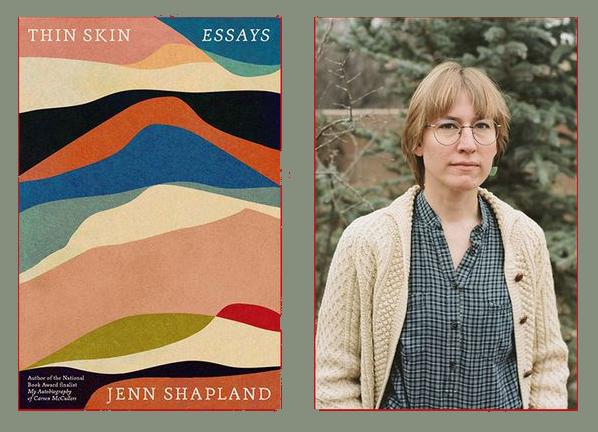
In her essay “The Meaning of Life,” Jenn Shapland reckons with the gulf between herself and her friends from graduate school. Shapland thought they had so much in common. But perhaps she was mistaken; she muses that perhaps they never viewed the world the same way she does.
As they’ve aged, many of Shapland’s friends have begun raising children.
Shapland hasn’t.
She writes:
“I wonder what would change if procreation were just a weird hobby, like ceramics or CrossFit, instead of the ultimate key to human significance. Child rearing narrows to a pretty specialized interest set: education, human development, youth athletics. It feels desperate to make a pregnancy, a child, your last bid for meaning in this life. I mean, what if it doesn’t pan out? What if your kid is terrible, like We Need to Talk About Kevin bad?”
“But it also makes sense. We are alienated from our labor, we are exploited, so work does not provide meaning or value. Where else can meaning and value come from? If not work, it must be kids. What other values, what other sources of meaning, could there be? This is my question. I want to see more people trying to answer it.”
Over the course of the essay, Shapland approaches the idea that a person’s life can be equally meaningful if that person creates art instead of children. Shapland writes about Silent Spring author Rachel Carson’s attempt to preserve a patch of woods; Shapland decides that a life protecting an ecosystem would be meaningful, too.
She writes:
“We can leave other things behind besides children. Other forms of longevity exist, even if they are unquantifiable.”
“[Procreation is] an attempt to grasp immortality, to try to pass on your values, your stuff. But relying on children as our legacy is what gave us generational wealth, laid the foundation of systemic racism. If we extend our idea of family beyond the individual to the wider world of creatures and ecosystems, we can begin to ask what we want for them. From them. We can begin to see ourselves in relation. Acknowledging and reckoning with death – with the limit on our existence, with the fact that we are temporary – can reframe what it means to live. What do we want to leave behind? What do we want to support, maintain, in the limited time we are here?”
Shapland wants for us to live more thoughtfully. She writes that procreation is not the only way to preserve our legacy here.
Reading the essay, though, I found myself wishing that Shapland would reckon even more deeply with transience. Because it is not just that we will die. The whole enterprise is transient.
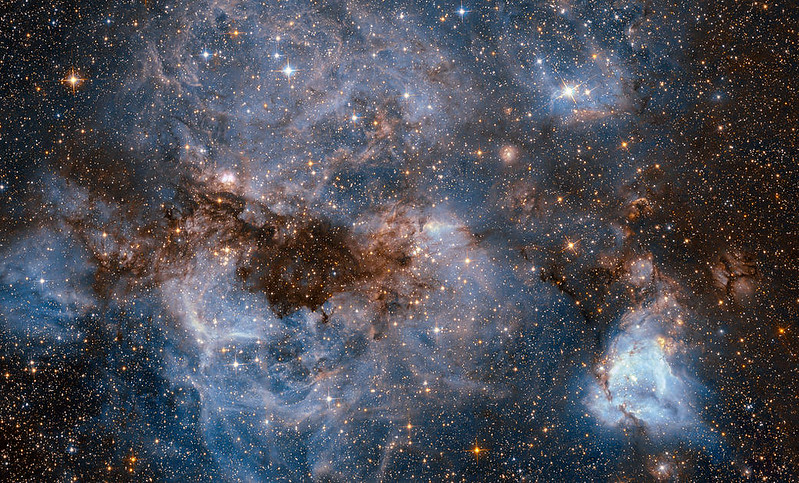
If our sun’s lifespan were represented as a twenty-four hour day, the current time would be 10:58 a.m. Humans have walked the earth for a single minute; multicellular life began around 7 a.m.
We have until 7:36 p.m. before our sun grows too hot and all Earth’s water boils off into space.
If we humans are wise – if we choose to be good ancestors, and our descendants choose to be good ancestors – our species might survive long enough to colonize the stars. This planet will become uninhabitable (to all life) by 8 p.m., and our home sun will die at midnight, but some human descendants could potentially travel elsewhere before then.
Eventually, though, all life – everywhere – will end. There’s only so much order available to create local patches of structure within the universe. Our bodies, our books – each structured thing costs chaos to build.
This is the fundamental currency of our universe. How much order must become chaos for you to sing a song? To write a book? To travel between planets?
How much order must become chaos for another star to form?
Once all our universe’s order has been used up, the game is over. In the end, chaos will permeate all space. All stars will go dark. Buildings and planets and even galaxies will crumble. Our species, obviously, will disappear. Our artwork will vanish. Our existence will be over, and we will be forgotten.
There will come a time when not even an amorphous cloud of cosmic dust could have enough energy for another thought.
In game theory, this sort of boundary condition is seen as a reason to defect. Within a game like “The Prisoner’s Dilemma” played over multiple rounds, if the players know when the game will end, then a “rational” player would plan to defect in the final round … and, knowing that, the “rational” opponent would defect in the round before … and, knowing that, the “rational” player should defect even sooner …
In The Evolution of Cooperation, Robert Axelrod writes “If the game is played a known finite number of times, the players … have no incentive to cooperate.”
Our universe has a boundary condition imposed by the steady tumble of entropy, thermodynamics’ “Second Law.”
Our connections to others – to the people around us now, and to the people yet to come – to plants and animals and the world – can be a profound source of meaning in our lives. But these connections can’t be our only source of meaning. Because every life that we’re connected to will end.
Our work can endure for a while – some works, for a great long while – but eventually the chaos will come. Everything we make will disappear.
Our families? Children? Our children’s children?
All lineages will end.
But this isn’t reason to despair. Quite the opposite: the unavoidable terminus is a little nudge from the universe toward decadence. Grandma smiling as she opens a box of cupcakes. “Go on, you deserve a treat.”
Because the world will end, our lives wouldn’t have meaning if we devoted ourselves only toward the future. Our lives couldn’t be worthwhile if we sought only to help others – those other people’s lives would have to be inherently meaningful for the act of helping them to add up to anything more than zero, but why would their lives matter more than our own?
In addition to whatever else we do, we have to seek pleasure. To find a way to greet the world around us with delight and joy.
Which is, I believe, an answer that Shapland would find agreeable, had she allowed, for instance, Katie Mack’s The End of Everything to guide her musings.
I think we should take care of the world. The act of caring matters, but not just because of the impact we’ll have on the future: caring matters now. Preserving this place that we call home, and reaching out to help those in need. Not for the future’s sake; because these moments of care accrete to become a meaningful life.
Shapland writes:
“Each day is a question we ask ourselves – what is life? — and answer: this.”
 Frank Brown Cloud