In Jake Maia Arlow’s How to Excavate a Heart, the novel’s protagonist inadvertently finds herself on a date with someone named May at the National Portrait Gallery in Washington D.C. The protagonist expects that they’ll slowly traipse through the gallery, looking at all the art, bantering.
But that’s not what happens.
May runs ahead of me, out of the courtyard and up the spiral staircase, weaving through the other museum-goers as they observe the art at a leisurely pace.
“I don’t believe in wandering through museums,” she says, as we emerge two floors up. She’s a few steps ahead of me. “I know where all the good stuff is, so that’s where I go. Like, I don’t care about all the presidential portraits, but I always visit Michelle Obama.”
After power-walking through the museum, May spends a full minute staring at the portrait of Michelle Obama, slack-jawed with awe. And then she zips away, off to find the one other piece of artwork that she likes in the museum.
“That’s it?” I ask. “You went into a trance in front of Michelle Obama and now we’re moving on?”
“Yup,” May says. “We stay at a painting for as long as we need to see it. That’s all we need from Michelle.”
“I kind of want to look a bit at the other …” but she’s off again, and, against my better judgment, I follow.

#
I actually appreciate this character’s focus. Art museums select which pieces should be displayed according to a wide range of criteria, including historical, educational, and aesthetic concerns. Not everything that hangs on the walls was meant specifically for you. Also, the front rooms of the National Portrait Gallery are full of gaudy portraits of dead white men who made our world worse.
Still, I think that the characters in How to Excavate a Heart should’ve included (at least) two more artworks during their jaunt through the gallery.
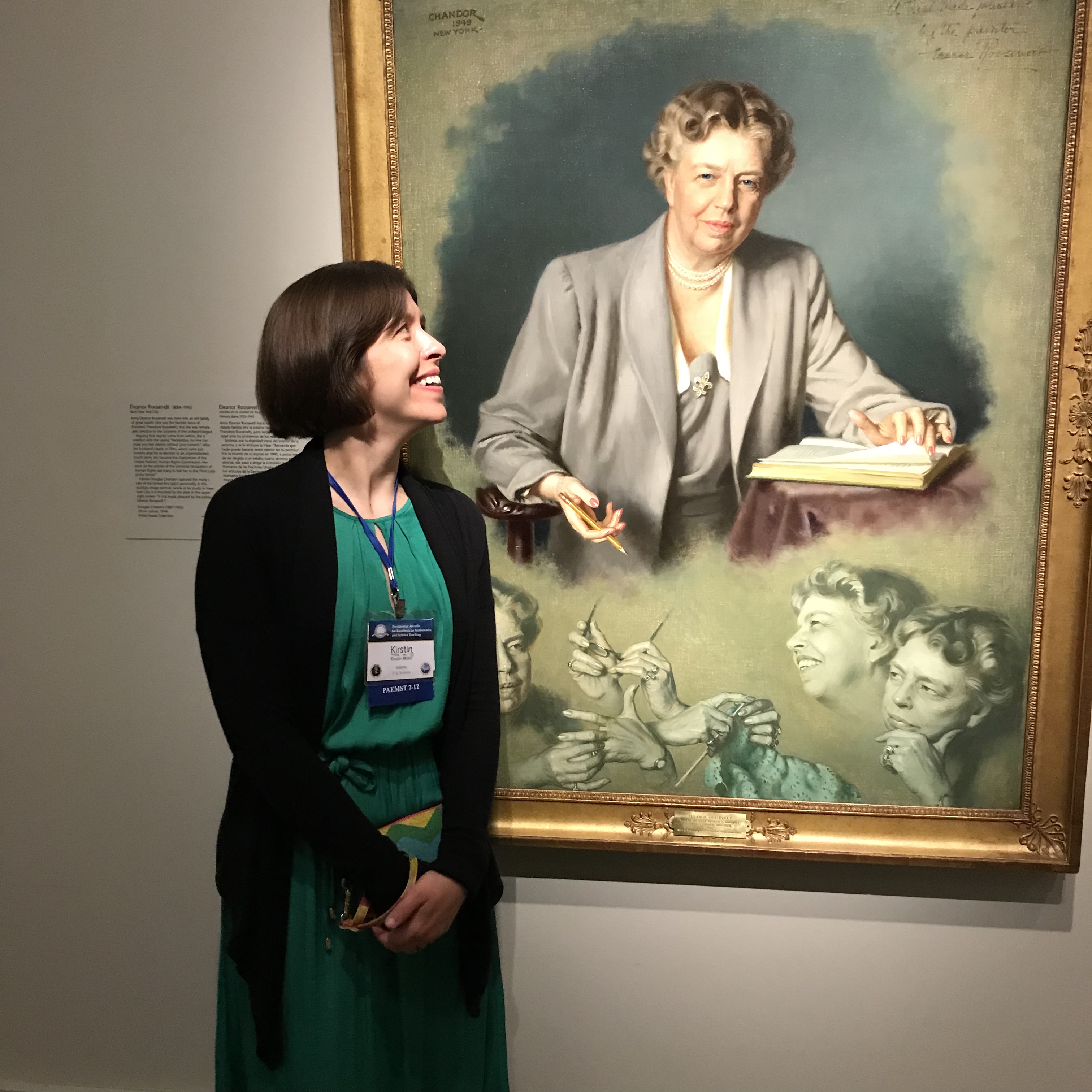
The portrait of Eleanor Roosevelt is fabulous. Roosevelt offers a wry smirk, and the repeated depictions of her hands show her engaged in a variety of both stereotypically masculine and stereotypically feminine endeavors (at the time, reading, writing, and scholarship were associated with masculinity). Roosevelt is shown to be thoughtful, mirthful, and confident. As a queer icon who constantly sought to improve the world – striving for inclusiveness and justice – her portrait would be an excellent inspiration for the Jewish women scientists of How to Excavate a Heart to visit during their date.
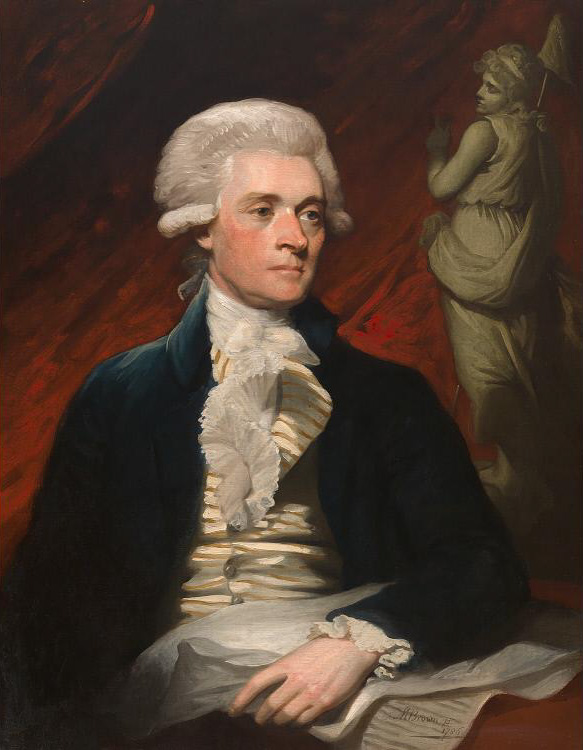
And, for very different reasons, I’d also highly recommend the portrait of Thomas Jefferson. I like that in this portrait, unlike many of the celebratory depictions of intolerant men that fill the gallery, Jefferson looks vaguely haunted.
In the official description of the portrait, curators have described Jefferson’s affect much more gently – that he “looks to the right, as if lost in thought” – and show unwarranted deference to his actions, stating only that “Jefferson, who like many of the early American presidents held slaves, wrestled with the rift between his philosophical beliefs and the country’s dependence on slavery.”
Beliefs underpin our actions, though. When there is a gap between a person’s behaviors and the principles that they claim to hold, the behaviors are a more reliable indicator. Words are much easier to fake.
And while it’s unfair to judge people who lived in other eras by current standards – the general zeitgeist of America was misogynistic, racist, and homophobic while Jefferson was alive – some people behaved worse than others. Even in the early 1800s, many people recognized that kidnapping, abduction, forced labor, and torture were wrong.
In some ways, Jefferson’s hypocrisy – his tendency to claim that he believed in justice, freedom, and equality, all while abetting and engaging in kidnap, rape, and torture – makes his behaviors seem worse.
#
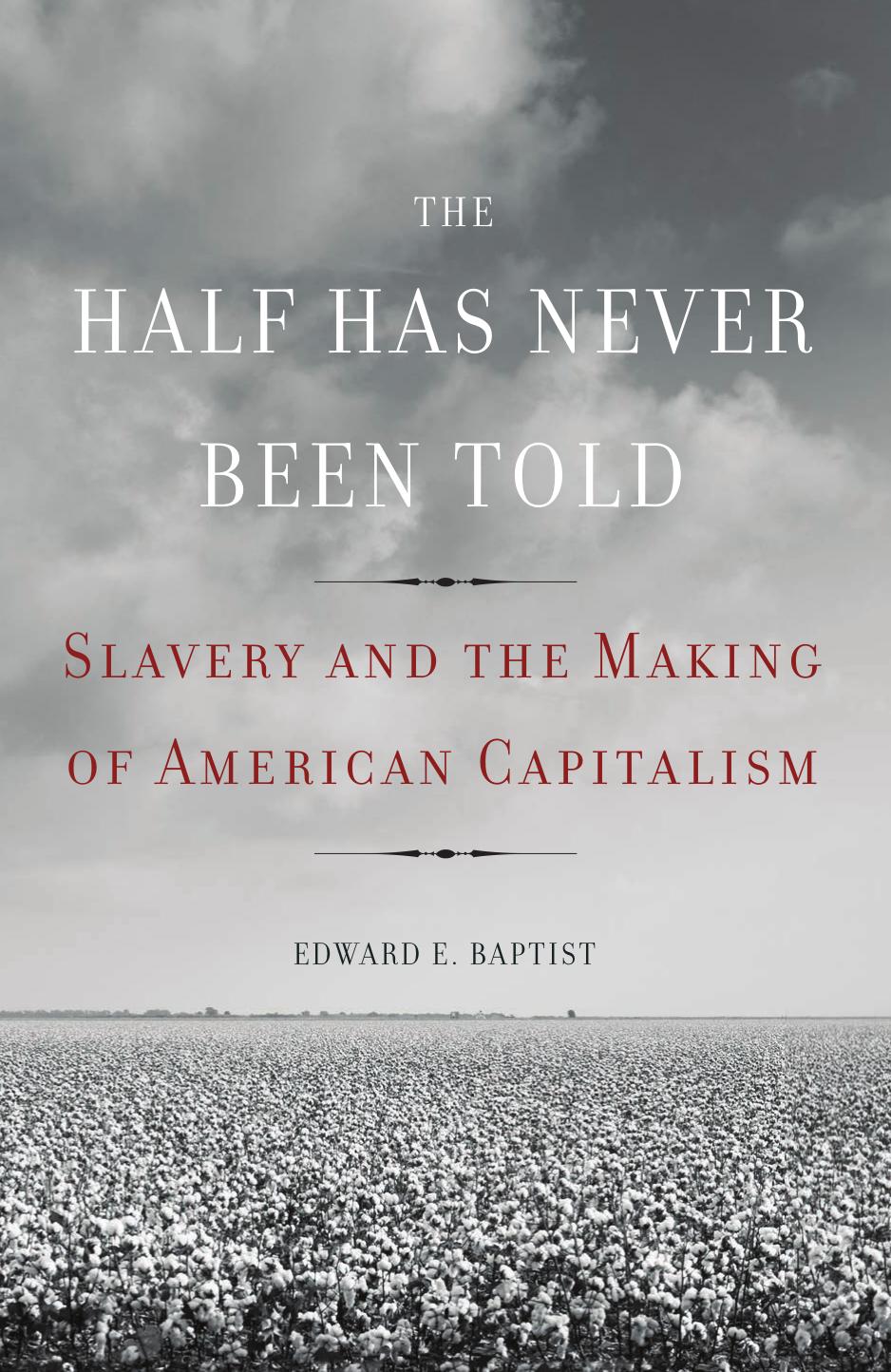
In The Half Has Never Been Told, Edward Baptist describes the technological innovations that increased America’s cotton production early in our country’s history. And the technology was rather simple, something akin to a contemporary spreadsheet: overseers measured how much work was done, and they wrote it down.
Careful tallying let the abductors know the precise limits of a human body; with torture, they ensured that people always pushed themselves to that limit.
Baptist writes:
The total gain in productivity per cotton picker from 1800 to 1860 was almost 400 percent.
This was comparable to the 400% gains in productivity for workers tending spinning machines – machines which became dramatically more complex during these years – and the 600% gains in productivity for workers in weaving mills, which had also increased in complexity, and even transitioned from water power to steam power during this time.
Every step of the manufacturing process – picking, spinning, weaving – saw similar gains in efficiency. And yet, increasingly elaborate machines were used only for the spinning and the weaving.
Between 1800 and 1860, there was no mechanical innovation of any kind to speed up the harvesting of cotton. Still, the possibility that enslaved people might have picked more cotton because they picked faster, harder, and with more efficient technique does not come readily to our minds.
What enslavers used was a system of measurement and negative incentives. Actually, one should avoid such euphemisms. Enslavers used measurement to calibrate torture in order to force cotton pickers to figure out how to increase their own productivity.
Historians of torture have defined the term as an extreme torment that is part of an inquisitorial process. The key feature that distinguishes it from mere sadistic behavior is that supposedly torture aims to extract “truth.” But the scale and slate and lash did, in fact, continually extract a truth: the maximum poundage of cotton that a man, woman, or child could pick.
Many of our early presidents – who were often mathematically inclined and lacking in a functioning moral compass – were eager participants in the effort to link ledger-keeping with torturous labor extraction.
In Saving Time, Jenny Odell discusses this practice:
Although they were far more subject to natural factors like the weather, plantation labor days were considered as fungible (interchangeable) as the industrial man-hour, and, as with the man-hour, their standardization obscured brutal circumstances.
In a 1789 letter to one of his overseers, general George Washington emphasized that slaves should “do as much in the 24 hours as their strength, without endangering their health or constitution, will allow of.” Anything less would be bad business sense, amounting to “throwing labor away.”
Thomas Jefferson produced his own experiments, writing in a memorandum, “four good fellows, in eight and a half hours, dug in my cellar a mountain of clay a place three feet deep, eight feet wide, and sixteen-and-a-half feet long. I think a middling hand in twelve hours, including his breakfast, could dig and haul away the earth of four cubical yards in the same soil.” **
As would be the case in many different contexts going forward, the science of recording labor days was inextricable from the project of intensifying them.

#
A glance at Thomas Jefferson’s haunted visage wouldn’t offer the characters of How to Excavate a Heart the same inspiration as the portraits of Michelle Obama or Eleanor Roosevelt, but his appearance of psychological turmoil gladdens me nonetheless. And makes his portrait into an interesting artwork, unlike so many that hang in that section of the National Portrait Gallery.
And then, after a glance back at our haunted past, the characters could go on to see some art by David Hockney, and the promise of a better future.

*********************************************************************************
** Given that Thomas Jefferson is discussing slavery, carefully documenting his own participation in an abjectly revolting system, maybe it seems silly to quibble with his math. But in addition to being awful, Jefferson fumbles his arithmetic. A quartet of people whom Jefferson described as “good hands” maintained an average rate of 11.6 cubic feet per hour for eight hours, and yet somehow Jefferson concludes that a “middling hand” should be able to maintain an average rate of 12 cubic feet per hour during a twelve-hour workday? Of course, this is Edward Baptist’s whole point. Enslavers made measurements, and then they continually fudged their numbers upward, expecting people to accomplish ever more and torturing them when they fell short.

 Frank Brown Cloud